

Plan Your Hokkaido Journey · Arrival strategy
Where Should You Start Your Hokkaido Trip: Sapporo, New Chitose, or Hakodate?
Choose the gateway that matches your route—not simply the most familiar name on the flight search.
Your first decision shapes every road that follows.
For most first-time visitors, arrive through New Chitose Airport and use Sapporo as your first base. Start in Hakodate instead when southern Hokkaido is the point of the journey—not merely a stop you hope to squeeze in.
These names are not direct alternatives. New Chitose is the broad airport gateway. Sapporo is the city that often gives a short trip its rhythm. Hakodate is both a port city and a southern gateway with its own airport, historic districts, coastal atmosphere, and access to nearby onsen and nature.
The best starting point depends on three decisions: where you land, how many full days you have, and where you want the journey to finish. Get those right before choosing individual restaurants or photo stops.
Use a practical arrival test: if your flight lands late, protect the first night near the place you can settle most easily. If you have heavy luggage or children, avoid adding a second connection simply because a destination appears nearby. If your final flight leaves from a different airport, draw that final transfer first; a one-way route often creates a calmer holiday than a return loop.
Three starting points. Three different jobs.
The flexible gateway
Choose it for the widest range of first-time routes. Official airport information places JR Sapporo Station at around 40 minutes by train and Otaru at about 1 hour 15 minutes by train.[1]
Best for: Sapporo, Otaru, Furano/Biei, Niseko, Noboribetsu, and open-jaw routes.
The easy city base
Choose it when you have three or four days, want minimal hotel changes, and value a strong mix of food, city culture, and day-trip flexibility.
Best for: first-timers, families, short stays, and travellers who want to unpack once.
The southern chapter
Choose it when a port city, heritage streets, night view, seafood, Yunokawa Onsen, or a south-to-north itinerary is your main story. Hakodate Airport is about 20 minutes from Hakodate Station by bus.[2]
Best for: 5+ nights, southern Hokkaido, and a one-way route that avoids backtracking.
Sapporo works well because it makes the first two days feel simple. It is a natural place to recover from a flight, learn the local food culture, and decide how much of the next days should be city, coast, countryside, or onsen.
For a short trip, treat Sapporo as the anchor rather than the obstacle before the “real” Hokkaido begins. With one hotel base, you can combine Sapporo’s landmarks and food with a dedicated Otaru day or a tailored route to a scenic region. The city itself is not a compromise; it is what gives a compact itinerary room to breathe.
Choose Sapporo first when you want to make your second decision tomorrow—not at the airport.
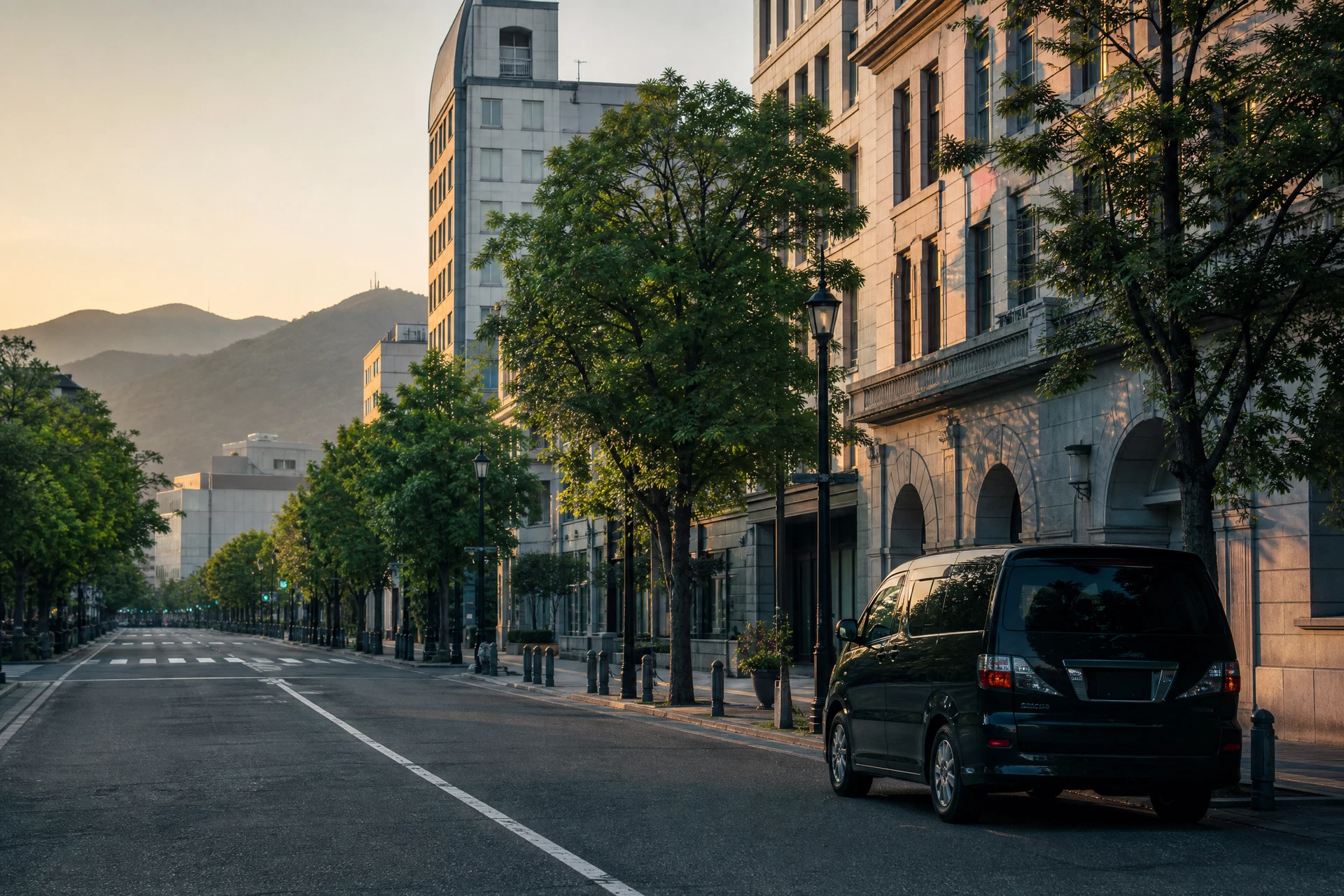
Start where your itinerary wants to end.
The right gateway often reveals itself when you draw the last night first. Choose an arrival and departure combination that reduces repeated ground.
3–4 days · New Chitose → Sapporo base
Arrive through New Chitose, stay in Sapporo, and choose one major day out. This gives you an easy arrival and protects your limited time from long repositioning.
A strong shape: New Chitose → Sapporo · city / Otaru / charter day · departure from New Chitose.
5 days · New Chitose → regional overnight → New Chitose
With five days, add a countryside or onsen chapter. The extra night makes Furano/Biei, Niseko, Noboribetsu, or Lake Toya feel like a destination rather than a long commute.
A strong shape: New Chitose → Sapporo → regional overnight → Sapporo or airport area → departure.
6–7+ days · Hakodate → south-to-central route → New Chitose
Consider an open-jaw itinerary: begin in Hakodate, travel north through an onsen or lake region, then finish near Sapporo or New Chitose. Hakodate’s official guide presents a rich mix of historic streets, food, seasonal scenery, hot springs, and nearby nature—enough for it to be a true opening chapter.[3]
A strong shape: Hakodate → Yunokawa / Onuma / Lake Toya → Noboribetsu → Sapporo → New Chitose.
Winter · choose fewer pivots
In winter, use the airport and city base that keeps the route short and calm. A flexible Sapporo or resort-based plan usually works better than a long chain of hotel changes.
A strong shape: New Chitose → Sapporo, Niseko, or an onsen stay · leave extra time around your flight days.
Start with the first full morning, not the arrival airport. If that morning should be a city breakfast, a market, museums, or an easy day trip, New Chitose to Sapporo is the natural handoff. If the first full day should be a port-city walk, seafood breakfast, historic district, and an onsen evening, Hakodate is a stronger opening. If central scenery is the purpose, an Asahikawa arrival can reduce backtracking, particularly in the green season.
Next, choose the last night before you choose the first. A morning flight from New Chitose is easiest when the final night sits near Sapporo or the airport corridor. A south-to-north journey becomes easier when the arrival is Hakodate and the departure is New Chitose. This is why an open-jaw itinerary can be more restful: it replaces the need to repeat the same long road with a forward-moving story.
Then use arrival time as a hard constraint. A late landing calls for a simple transfer, dinner, and sleep; it is not the right moment to begin a long rural route. An early arrival can support a private transfer that becomes a gentle sightseeing day, but only if luggage, daylight, and hotel timing are considered. Families and winter travellers should be even more conservative, protecting the first evening and keeping the second morning flexible.
Finally, be honest about the reason you are travelling. Choose New Chitose and Sapporo for versatility, Hakodate for a southern chapter with character, and Asahikawa for a focused central route. A gateway is not just where the plane lands. It is the decision that determines whether the next five days feel like a connected journey or a sequence of transfers.
When comparing flights, place the ground journey beside the airfare. An inexpensive arrival can become less attractive if it requires an extra transfer, a late hotel check-in, or an immediate return drive the next morning. Conversely, a slightly different airport or open-jaw ticket can create a much cleaner sequence of city, onsen, and scenery. The valuable comparison is total travel effort, not only the flight search result.
New Chitose is usually the best choice when you want flexibility after arrival. It supports a Sapporo base, Otaru day, onsen route, ski or resort transfer, and a number of central journeys. Hakodate becomes stronger when the city itself is a reason to travel and you have enough nights to let the route move north. A focused central arrival makes sense when Furano, Biei, and northern landscapes are more important than a Sapporo city chapter.
Use luggage as a planning tool. If you have large suitcases, ski equipment, young children, or a multi-generational group, the first transfer should be simpler than the map suggests. Make the arrival day about reaching the place where you can unpack. On the next day, the route can open up with a driver or a planned connection that does not require hauling bags through several stations.
For every gateway, prepare one “good weather” opening and one quieter alternative. A clear morning may support a scenic transfer or coastal detour; rain, wind, or a late flight may call for a city lunch, museum, market, or an early hotel arrival. This does not weaken the plan. It gives the first two days enough flexibility to feel composed no matter how the journey begins.
In winter, choose the airport and first hotel combination that removes unnecessary pivots. A Sapporo, resort, or onsen base can be a stronger start than a long chain of transfers, even if another region appears close on a map. Protect the first evening, give the next morning some margin, and let the road open only after the group is rested and conditions are clear.
In summer, long daylight makes a direct countryside or coast transfer more tempting. It can work beautifully when the first hotel is part of the experience, but avoid planning a full sightseeing day immediately after a long flight. Use one or two meaningful stops, then arrive early enough to enjoy dinner and the changing light. The same approach works in autumn, when foliage and weather can shape the road more than the clock.
In spring, a city-led start can be especially useful because seasonal timing is less uniform across the island. A flexible base lets you adjust toward blossoms, coast, gardens, or a quiet rural road after arrival. It also gives you a simple alternative if rain or wind changes the best outdoor plan for the first full day.
For any season, decide which experience must happen near the beginning, which can move to the middle, and what could be left for the final morning. This turns the start point into a practical planning tool. New Chitose, Sapporo, Hakodate, and Asahikawa each become the right choice when they reduce the effort required to reach the chapter you value most.
Choose the first night for tomorrow morning, not only tonight.
Before confirming a first hotel, imagine the next morning. Can the group begin with a relaxed breakfast, make a simple departure, and reach the first real experience without undoing the work of the previous evening? If the answer is yes, the arrival base is doing its job. If the answer is no, a different first-night location or a direct private transfer may produce a much easier opening.
This small test prevents the common mistake of choosing a hotel only for airport proximity or one attractive feature. A good start point makes both the first night and the next full day feel lighter.
Use the airport as a handoff, then choose your first real destination.
Stay near Sapporo when flexibility matters
The airport-to-city connection is straightforward, and a city base leaves your next morning open to west, north, or south-bound routes.
Transfer onward when the experience starts outside the city
If an onsen, a resort, or a southbound corridor is the reason you came, a direct private transfer can turn arrival day into part of the journey.
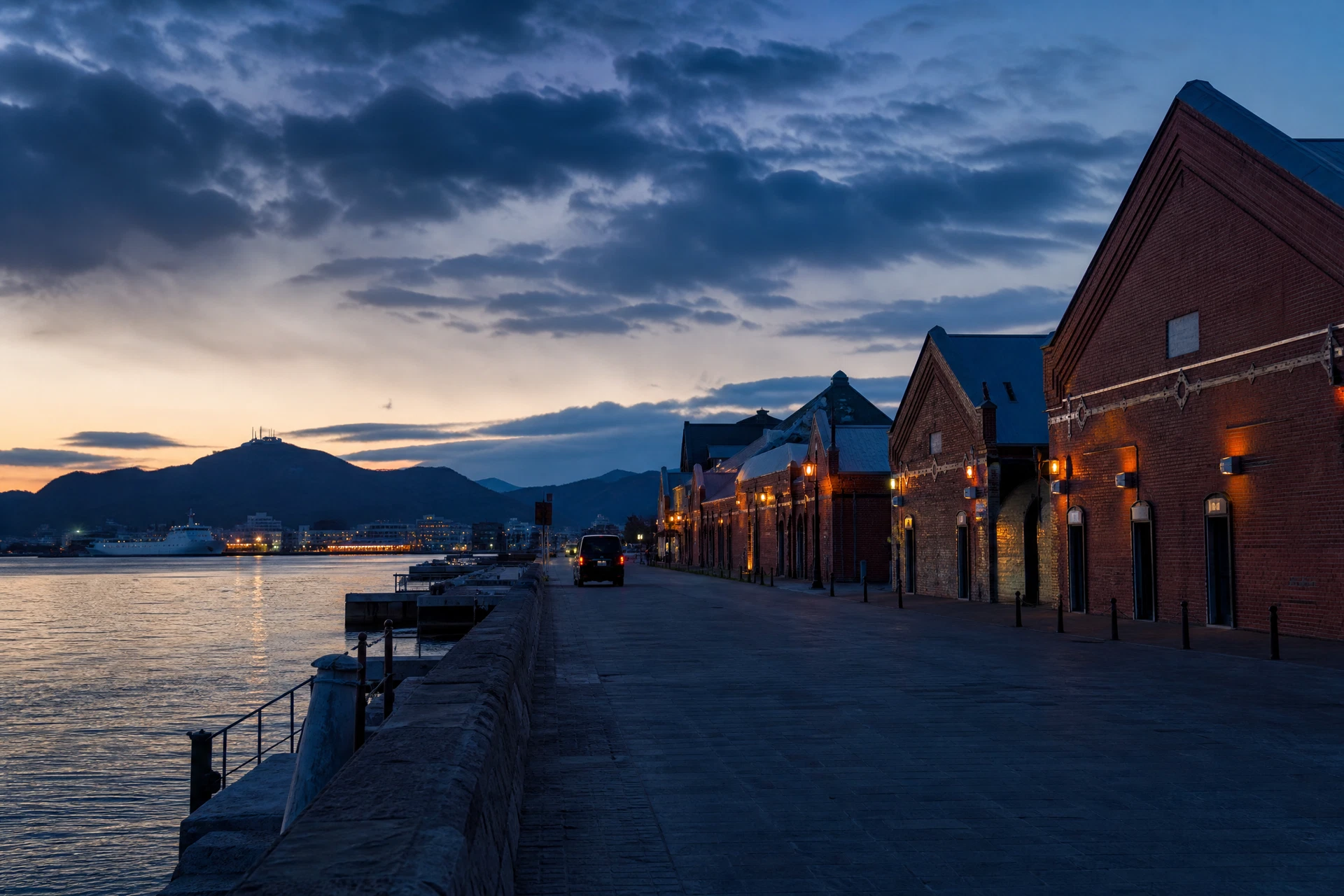
A private driver can be most valuable when your “start point” is more than a hotel check-in. Think airport to onsen, port city to lake, city base to countryside, or one hotel change that should also include a food stop and a viewpoint.
That is where the route stops being a transfer and becomes a day worth having. We can arrange a fully private day or connect several days around your chosen gateway, with the pace adjusted for luggage, children, winter conditions, or particular interests.
To choose the right duration after choosing your gateway, read How Many Days Do You Need in Hokkaido?. For overall first-trip planning, start with Hokkaido for First-Time Visitors.
Questions to settle before you book a flight.
Is New Chitose Airport the same as Sapporo?
No. New Chitose is the major airport gateway near Sapporo, while Sapporo is Hokkaido’s principal city and a common hotel base. Many itineraries begin by arriving at New Chitose and staying in Sapporo.
Should I start my Hokkaido trip in Sapporo or Hakodate?
Start in Sapporo or via New Chitose when you want a central base, an easy first-time route, or access toward Otaru, Furano, Biei, Niseko, and onsen towns. Start in Hakodate when southern Hokkaido, port-city atmosphere, or a south-to-north route is the priority.
Can I visit Hakodate from New Chitose Airport?
Yes, but it is a significant journey. Official airport information lists New Chitose to Hakodate at about 40 minutes by air or roughly 3 hours 30 minutes by car, so it is best treated as a meaningful route leg rather than a casual day trip.
Where should I stay first when arriving at New Chitose Airport?
Sapporo is often the most flexible first-night base for a city-led itinerary. An onsen town or southern destination can be a better first night when that is the central purpose of your trip.
Is an open-jaw Hokkaido itinerary a good idea?
It can be excellent for five or more nights. Arriving in one region and departing from another reduces backtracking, but it needs realistic travel legs, hotel changes, and flight availability.
Should I stay near New Chitose Airport on my first night?
It can make sense after a late arrival or before an early departure. Otherwise, move toward the first region you genuinely want to experience so the airport does not become an unnecessary detour.
Which Hokkaido airport is best for Furano and Biei?
Asahikawa can be a focused gateway for central Hokkaido, while New Chitose works well when Furano and Biei form one chapter of a wider Sapporo-based route.
Tell us where you land and where you would like the road to take you.
Share your arrival airport, number of nights, season, and the experiences you care about. We will help shape the route around a start that makes sense.