
Plan Your Hokkaido Journey · First-time visitor guide
Hokkaido for First-Time Visitors: A Private Driver’s Planning Guide
The thoughtful way to choose a route, pace your days, and turn a vast northern island into a journey that feels personal from the moment you land.
A first trip is not about seeing everything. It is about choosing the right first chapter.
Hokkaido is Japan’s northernmost prefecture and a place of wide seasonal contrasts: city energy in Sapporo, powder snow in Niseko and Furano, onsen landscapes, fresh seafood, and national-park scale wilderness.[1]
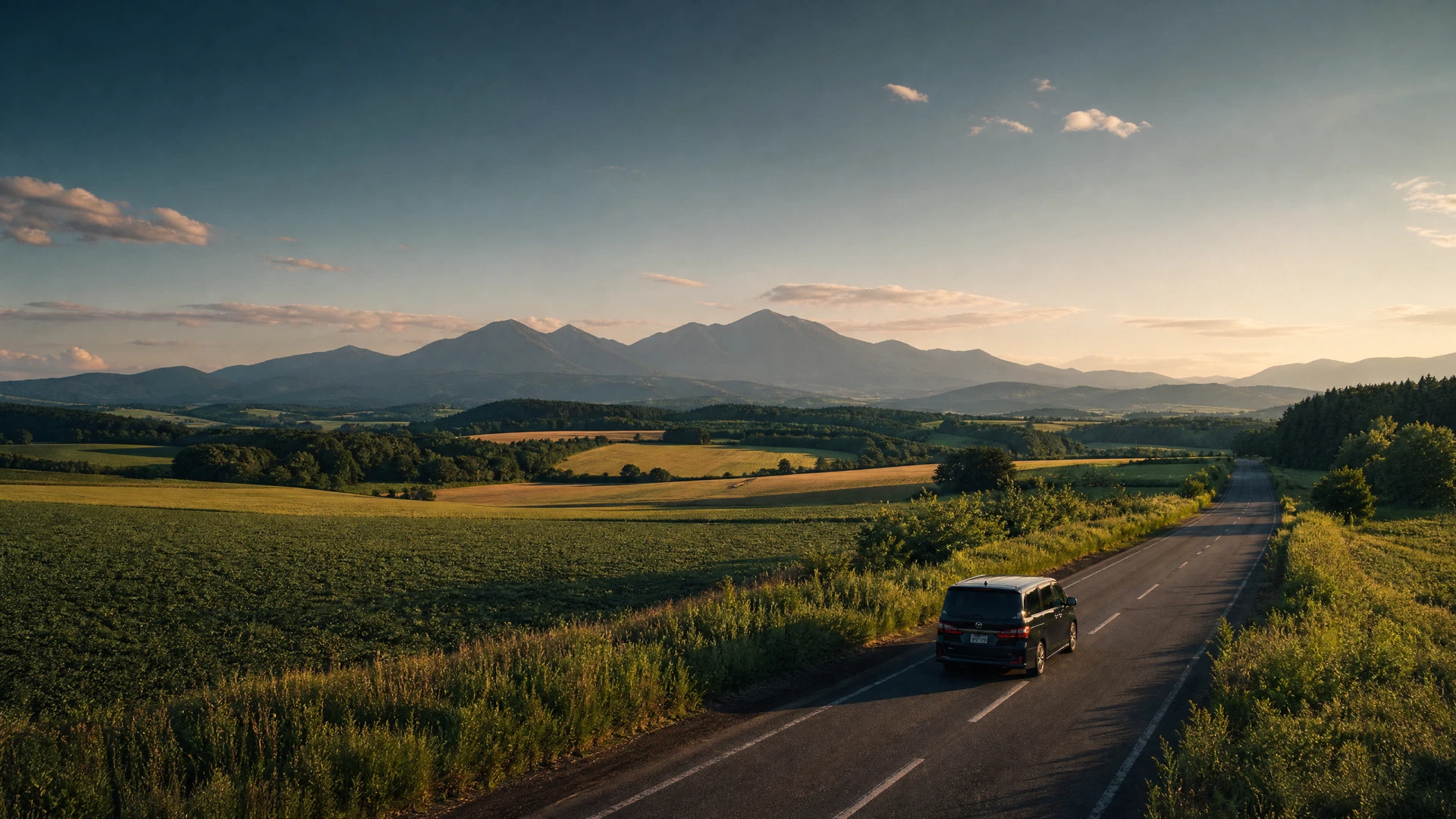
That variety is why first-time visitors can feel spoiled for choice—and why a well-shaped itinerary matters more here than a packed checklist. The island rewards travellers who select one or two connected regions, allow space for weather and appetite, and treat the drive itself as part of the experience.
For most first visits, the goal is simple: arrive smoothly, orient yourself in a city or resort base, then let the landscape widen gradually. A private car charter helps turn that idea into a practical route by keeping luggage, transfers, viewpoint stops, and meal timing in one flexible plan.
First-time visitors often begin with a map and a long list of names. That is useful for inspiration, but it is not yet an itinerary. The more reliable starting point is to decide what you want the trip to feel like at the end of each day. Do you want to return to a lively city hotel? Arrive at an onsen before dusk? Spend the last hour of daylight on a country road? Those answers naturally reduce the number of regions that belong in the same journey.
Think of Hokkaido as a collection of corridors. A Sapporo-led corridor can extend to Otaru, an onsen stay, or Furano and Biei depending on the season. A southern corridor can begin in Hakodate and move through coastal or lake landscapes before continuing north. A winter trip may be deliberately compact, built around an airport transfer, one resort or city base, and a restorative evening. None of these is the “complete” Hokkaido trip. Each is a coherent first chapter.
Arrival day deserves its own plan. If your flight reaches New Chitose late in the afternoon, treat dinner and a straightforward hotel transfer as the achievement. If you land early and have the energy for a scenic route, the first transfer can include a meal or a viewpoint, but it should still leave room to settle. The same principle applies on departure day: keep the final morning local, protect the airport transfer, and do not turn your final hours into a cross-island race.
Season should be the final filter. In summer, daylight lets a countryside day breathe. In autumn, foliage timing can shape which roads make sense. In winter, extra transfer time and a smaller geographic footprint can make the journey more enjoyable. In spring, the pleasure may be quieter roads and a later, gentler seasonal change. A flexible private driver day is most valuable when it helps the route respond to these realities rather than pretending they do not exist.
Four decisions that simplify a first visit
Choose one primary region
Sapporo and the west/central corridor are an easy first chapter; Hakodate, eastern Hokkaido, or the ski areas can become a focused second chapter.
Match nights to distance
Three nights can support one compact base. Five or more nights make room for a city, a scenic drive, and an overnight landscape change.
Let the season lead
Winter, flower season, autumn colour, and green-season hikes each create a different version of Hokkaido.
Plan the transfer first
Your airport, luggage, arrival time, and first hotel determine how relaxed the rest of the route can feel.
Hokkaido is often best understood as several journeys rather than one giant loop. Start by deciding whether your first chapter is city-and-coast, alpine scenery, onsen country, southern history, or a slower agricultural landscape. Once that choice is made, the rest of the route becomes clearer.
Sapporo is a convenient first base for food, museums, and day trips to Otaru. A summer or autumn extension can lead toward Furano and Biei; winter travellers might instead shape their trip around Niseko. If hot springs are the priority, Noboribetsu and Lake Toya create a natural south-western pairing.
A practical first-time principle: choose fewer hotel changes than you think you need, and give each day one principal destination.
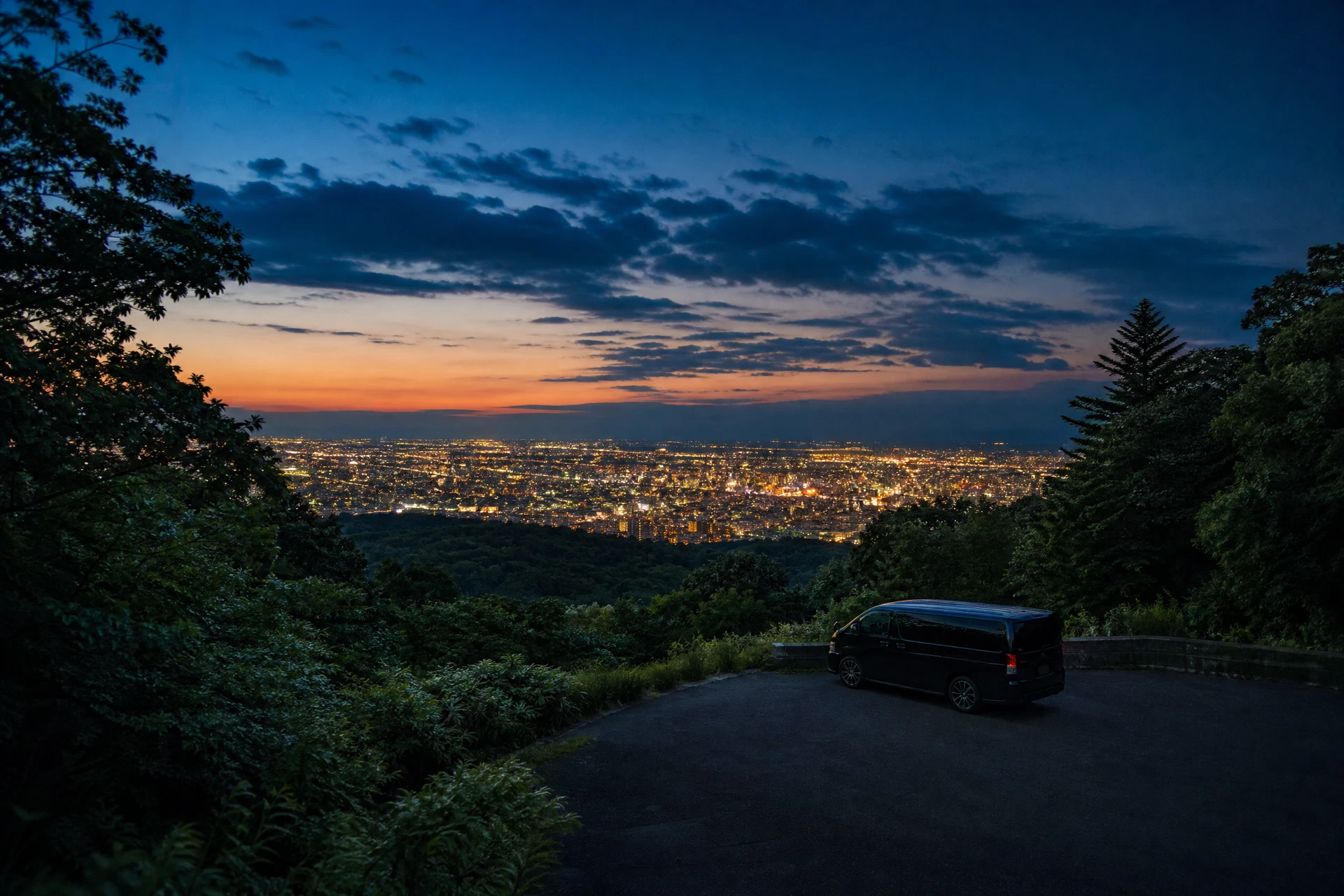
Rail and buses can work well for concentrated city stays. Self-driving gives independence, while a private driver is a useful middle path for travellers who value flexibility without navigating unfamiliar roads, especially with children, several suitcases, or multi-stop days.
| Travel style | Works well when | Plan around |
|---|---|---|
| Rail & city transport | You are staying mainly in Sapporo, Hakodate, or other connected urban centres. | Timetables, luggage transfers, and the final connection to rural accommodation. |
| Self-drive | You enjoy navigating and want complete control of remote stops. | Seasonal road conditions, parking, daylight, and driver fatigue. |
| Private driver | You want a multi-stop day, relaxed luggage handling, and an itinerary that can adapt. | Sharing your priorities early so driving time and stops can be balanced well. |
Hokkaido changes its character four times a year.
JNTO highlights Hokkaido’s late spring blossoms, cool summer conditions, short but vivid autumn colour, and well-known winter snow experiences.[1] The best month is the one that matches the reason you want to travel.
Powder snow, hot springs, illuminated cities, and a deliberate pace between weather windows.
Later blossoms, quieter roads, and the first return of green in the lowlands.
Lavender, long daylight, cooler air, and scenic drives through Furano and Biei.
Foliage, harvest flavours, onsen stays, and a striking transition before the first snow.
First, name the experience that matters most. It may be snow and an onsen evening, a lavender-season road, a port-city food chapter, or a quiet rural landscape. Next, choose the airport and city base that make that experience easy to reach. Then decide how many hotel changes your group can enjoy rather than tolerate. These decisions are more useful than choosing individual attractions too early.
For a compact first visit, make the route deliberately small: arrive, settle, enjoy one city chapter, take one full regional day, and leave without a rushed final transfer. For a longer stay, add only the overnight that changes the trip’s mood. A lake, onsen, coastal town, or countryside stay earns its place because it gives you a different morning, not because it fills an empty night.
Transport should support this logic. Use public transport for concentrated city days, a private driver for the day that mixes luggage, rural roads, multiple stops, or time-sensitive light, and a simple transfer when the goal is simply to arrive well. You do not need to choose one method for the whole trip. Combining a city stay with one or two thoughtfully planned driving days often gives first-time visitors both independence and ease.
Finally, leave one flexible block in the plan. It can become a weather adjustment, a local lunch, an early bath, a second look at a landscape, or simply a slower morning. That buffer is not unused time; it is what makes the itinerary feel personal rather than pre-programmed.
What a private driver changes for a first visit
The benefit is not simply transport. It is the ability to keep the day human: leave when your group is ready, pause at a viewpoint, move on from a busy stop, linger over lunch, or adjust when the weather changes. That matters on an island where distances can look short on a map but the best moments often happen between named destinations.
A charter is especially useful on arrival or departure days, for routes that combine city and countryside, and for guests carrying winter clothing, ski equipment, or family luggage. Your driver can handle the driving rhythm while you keep your attention on the view, conversation, and next stop.
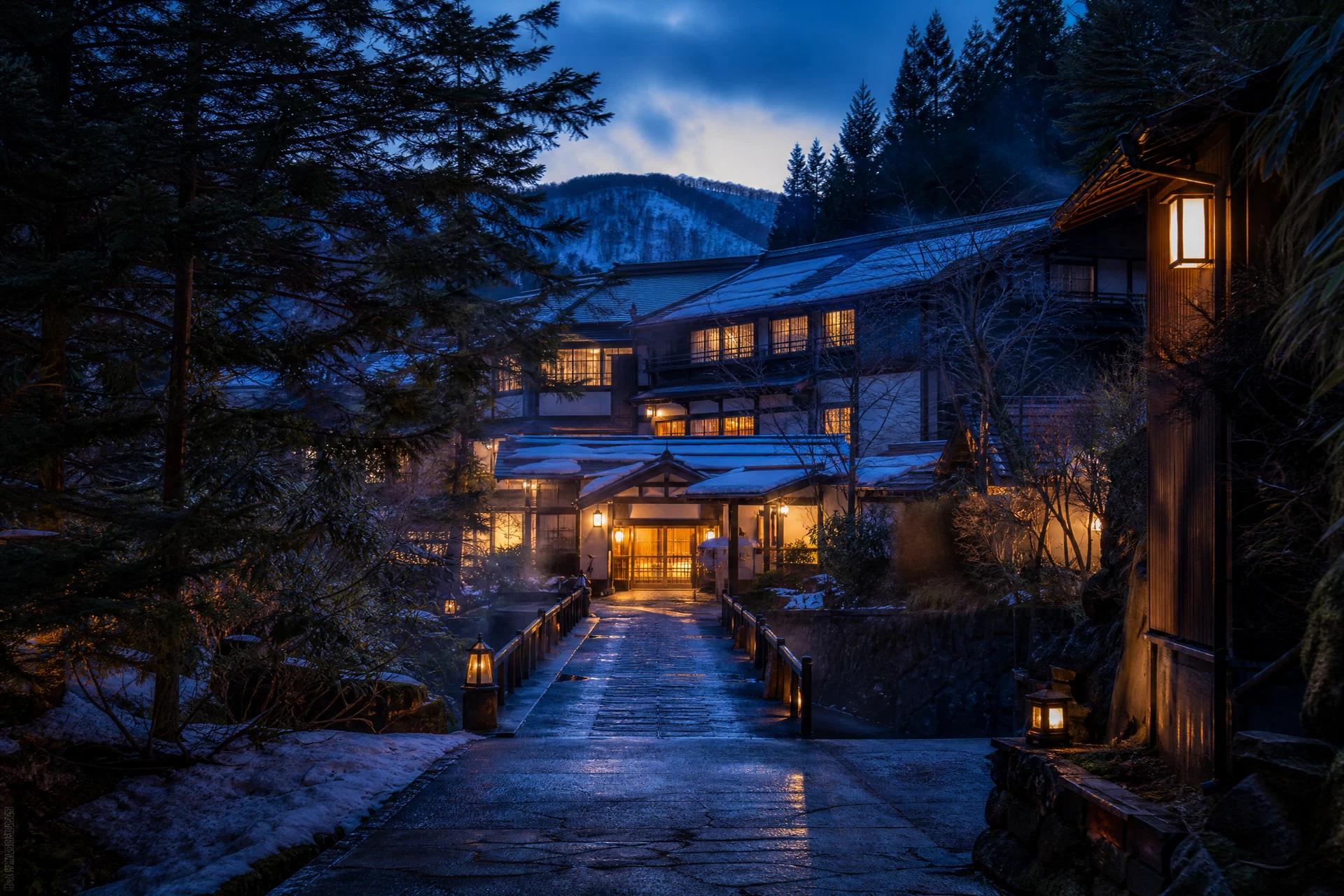
There is no single “best” Hokkaido itinerary. But this shape gives a first-time traveller the right balance of city, coast, scenery, and downtime. Use it as a starting conversation rather than a fixed schedule.
- Day 1
New Chitose arrival → Sapporo
A calm airport transfer, hotel check-in, and an easy first evening.
- Day 2
Sapporo → Otaru → Sapporo
City culture, canal warehouses, a coastal lunch, and a relaxed return.
- Day 3
Sapporo → Furano or Biei
Move through open landscapes with enough time for viewpoints and a countryside stay.
- Day 4
Scenic countryside → onsen or Sapporo
Choose a slower day shaped around food, flowers, hiking, or a hot-spring check-in.
- Day 5
Departure or a final city morning
Keep the final transfer simple and leave room for the unexpected.
Choose the version of Hokkaido your days can actually hold.
With three or four nights, choose one base and one memorable road day. With five nights, add one regional overnight that changes the atmosphere of the journey. With a week, connect two regions in one direction rather than returning to the same city after every excursion.
The common first-trip mistake is planning by attraction count rather than usable hours. A route becomes more enjoyable when you decide which meal, landscape, or overnight should be the day’s anchor, then allow transfers and weather to sit around it.
If you are unsure, begin with your arrival airport, the season, and the experience you would most regret missing. Those three inputs will usually narrow the route more effectively than a long list of sightseeing pins.
Start with the arrival day. Select the first hotel and transfer based on when you land, how much luggage you have, and what kind of first evening will help you reset. A later arrival is best used for a direct handoff, dinner, and sleep. An earlier arrival can support a city walk or a scenic transfer, but only when the hotel handoff remains comfortable.
Then choose the middle day you most want to remember. This is the day that deserves the cleanest schedule: perhaps a private Furano and Biei route, an Otaru and coastal chapter, a snow-and-onsen day, or a southern Hokkaido road. Put the most important experience between two uncomplicated nights rather than after a long flight or before an early departure.
Use the remaining days to support that middle day. A city afternoon can create an easy beginning; an onsen night can create a pause after it; a flexible regional day can absorb weather changes. This approach is more dependable than trying to assign equal importance to every calendar day. It leaves room for travel energy, seasonal light, and the unplanned moments that often become the story you tell later.
Finally, design departure day with the same care as arrival day. Choose a final hotel that makes the airport transfer simple, save only a nearby meal or short walk for the morning, and keep your last long drive for the day before. A calm ending protects the whole journey from feeling rushed in retrospect.
The first common mistake is assuming that more named places create a more complete trip. Hokkaido’s appeal is often the space between destinations: the change from city streets to open road, a long lunch in a small town, the first view after weather clears, or an evening when no one needs to check a timetable. A route that includes fewer regions can make these parts possible.
The second mistake is treating an overnight as a place to sleep rather than a chapter of the route. Choose an onsen, lake, resort, or rural hotel because you want the evening and following morning, not merely because it sits halfway between two attractions. That mindset naturally reduces unnecessary hotel changes and gives every transfer a purpose.
The third mistake is saving flexibility only for bad weather. A flexible half-day is equally valuable in good weather, when an unexpected viewpoint, seasonal farm stop, or slower meal becomes worth more than the next item on the list. It is also useful for families, travellers with luggage, and anyone who prefers the trip to feel like a holiday rather than a timed route.
Before confirming the plan, read it from the perspective of the least energetic traveller in the group. Could they enjoy the arrival evening, the longest road day, the hotel changes, and the final transfer? If the answer is yes, the itinerary is likely realistic for everyone. If not, reduce the route before you add another attraction. Then use the Hokkaido itinerary-length guide to choose the number of nights and the start-point comparison to decide where the route should begin.
Questions worth answering before you book.
How many days do I need for a first trip to Hokkaido?
Three nights are enough for a compact city-and-day-trip stay. Five nights or more give you flexibility to combine a city, rural scenery, and an overnight destination without rushing.
Is Hokkaido suitable for a first trip to Japan?
Yes. Hokkaido offers a gentler pace, impressive seasonal scenery, excellent food, and strong transport links. The key is to plan travel distances realistically.
Should I hire a private driver in Hokkaido?
A private driver can be especially helpful for multi-stop days, rural routes, families, guests with luggage, or anyone who prefers not to drive in unfamiliar conditions.
Which airport should I use?
New Chitose Airport is the most common gateway for a Sapporo-based route. Hakodate and Asahikawa can make sense when your itinerary focuses on southern or central/northern Hokkaido.
What should I plan differently in winter?
Keep routes flexible, allow extra transfer time, dress for the conditions, and avoid overfilling a single day. A driver can remove the pressure of navigating unfamiliar winter roads.
Your first Hokkaido itinerary should feel like yours.
Share your dates, group size, arrival airport, and the kind of experiences you want to remember. We will help shape a private route that respects the island’s scale and your own pace.