
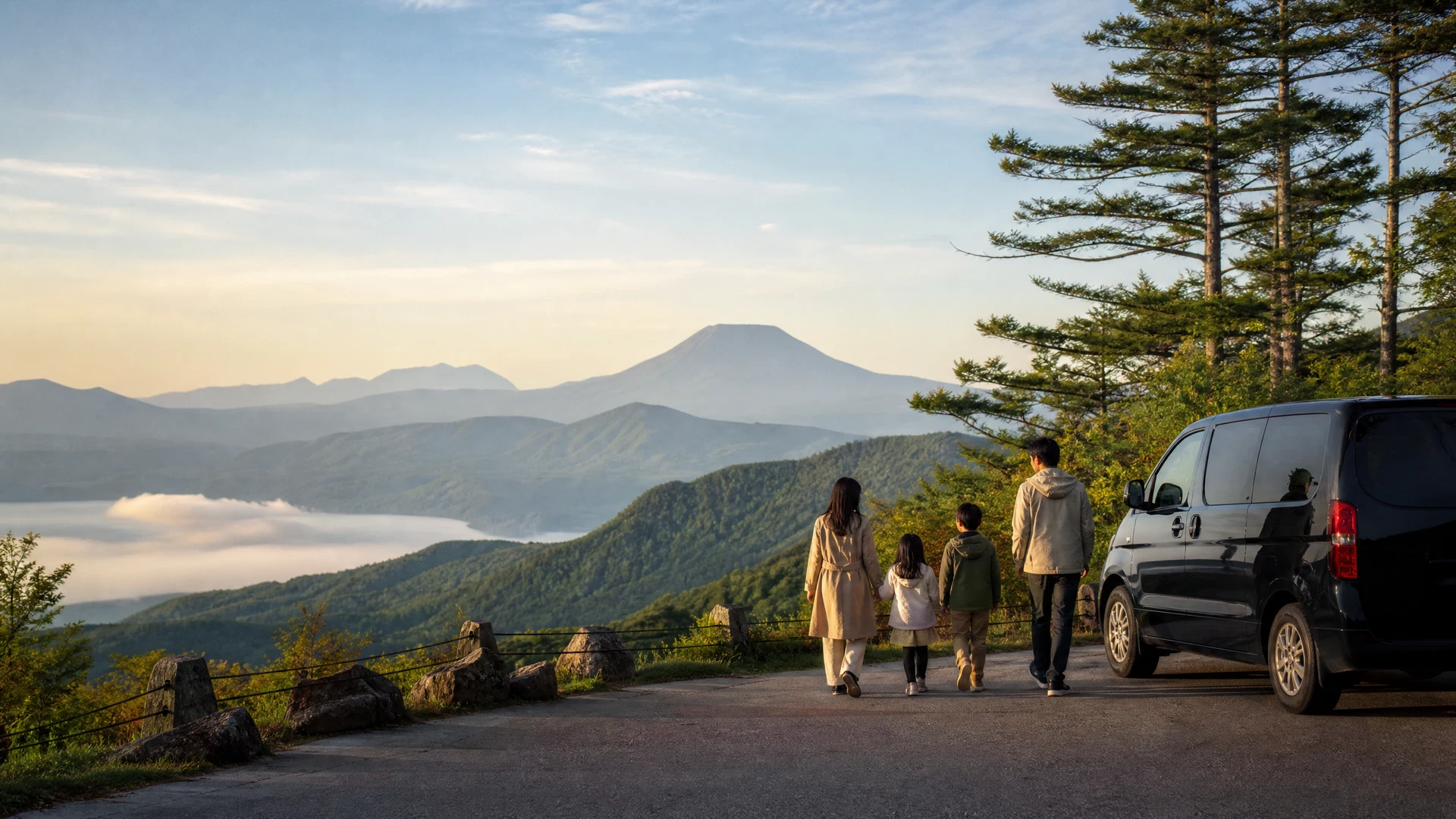
Family travel · Hokkaido at your pace
A Family-Friendly Guide to Exploring Hokkaido by Private Car
A practical way to protect the moments your family will remember—and leave room for the ones you do not plan.
A Hokkaido route feels better when its pace matches its purpose.
The best family trip is rarely the one with the most stops. In Hokkaido, it is the one where everyone still has energy for dinner, a short walk, and the view outside the window. The practical question is not how far a car can go in a day; it is when your group needs a bathroom, a meal, a reset, or an early hotel arrival. Plan those moments as part of the route, rather than as interruptions to it.
Hokkaido rewards clarity more than speed. Deciding what your day should feel like—rather than trying to see every pin on a map—creates room for weather, local food, and unexpected stops.
A private car is particularly useful when the road between experiences is part of the experience. It lets the route hold together without asking every member of the group to navigate luggage, timetables, or a rushed hotel change.
Children do not experience travel in the same units as adults. A two-hour drive can feel effortless when it has a snack stop, a lake edge, and a chance to move; it can feel endless when every minute is treated as transit.
Start with one anchor experience each day. It may be a city museum, an animal encounter, a canal walk, a scenic lookout, or an onsen arrival. Everything else should support that anchor instead of competing with it.
A useful family rule is to book only one time-sensitive activity per day. Morning light, nap timing, weather, and restaurant queues then become manageable choices rather than reasons to rush.
A family-friendly itinerary protects the space between the highlights.
A new hotel is not only a new view. It is packing, check-in, room orientation, and a reset of everyone’s routine. For three or four nights, a Sapporo base plus one well-chosen overnight often feels more generous than a new hotel every day.
For longer journeys, let each overnight earn its place. An onsen town, a lakeside setting, or a rural region gives your family a different kind of evening without turning the route into a relay race.
A private car is most useful when it removes the least enjoyable parts of a family day: handling bags on a platform, racing a timetable, or deciding whether a tired child can manage one more connection.
Share your group size, luggage, child-seat needs, preferred meal times, and the type of stops your family enjoys. The route can then be shaped around comfortable intervals instead of a fixed coach-tour rhythm.
A family itinerary gets better when the non-negotiables are written down early. For some groups that means a nap-friendly transfer and a familiar breakfast; for others it means child seats, a hotel with an early dinner option, or enough time outside each day to let children move. These are not small details. They determine whether a scenic route feels generous or exhausting.
Think in three layers. First, protect the essentials: arrival time, luggage, meals, sleep, mobility needs, and the children’s ages. Second, select one meaningful experience per day: an animal encounter, a canal walk, a farm landscape, a museum, or an onsen arrival. Third, keep two or three optional stops that can disappear without damaging the day. This gives the route resilience when weather changes, energy dips, or a lunch becomes unexpectedly memorable.
For short trips, use a Sapporo base and one dedicated countryside or coast day. For five nights or more, add a single rural or onsen overnight only when it removes a long return drive and gives the family a different kind of evening. The aim is not to make every day educational or exciting. It is to give every traveller enough comfort to enjoy the moments that are.
The most successful family route is designed around the people who tire first—not the number of places on a map.
A realistic family day has a primary plan and a gentler version. The primary plan may be a scenic road, farm landscape, or coastal walk. The gentler version may be a later start, a longer lunch, an indoor stop, or an earlier hotel arrival. Writing both versions into the itinerary is not a compromise; it is how you prevent a rain shower, a missed nap, or a slow breakfast from turning into a stressful day.
Age also changes the shape of the route. Travellers with babies may value predictable meal and sleep windows above distance. School-age children often enjoy one hands-on or outdoor anchor with enough freedom to explore. Multi-generational groups may need fewer stairs, shorter walks, and a more generous pace around transfers. A private car creates room to make those adjustments, but the key decisions should be shared before the route is finalised.
When you select the family’s one priority for each day, make it clear whether it is a place, an experience, or an evening. A place might be Otaru, Furano, or a lake region. An experience might be a short nature walk, a craft stop, or a seasonal food lunch. An evening might be an onsen stay where nobody needs to get back in the car. The rest of the day can then support that priority instead of competing with it.
Plan one excellent thing per day, then give the family enough time to enjoy it together.
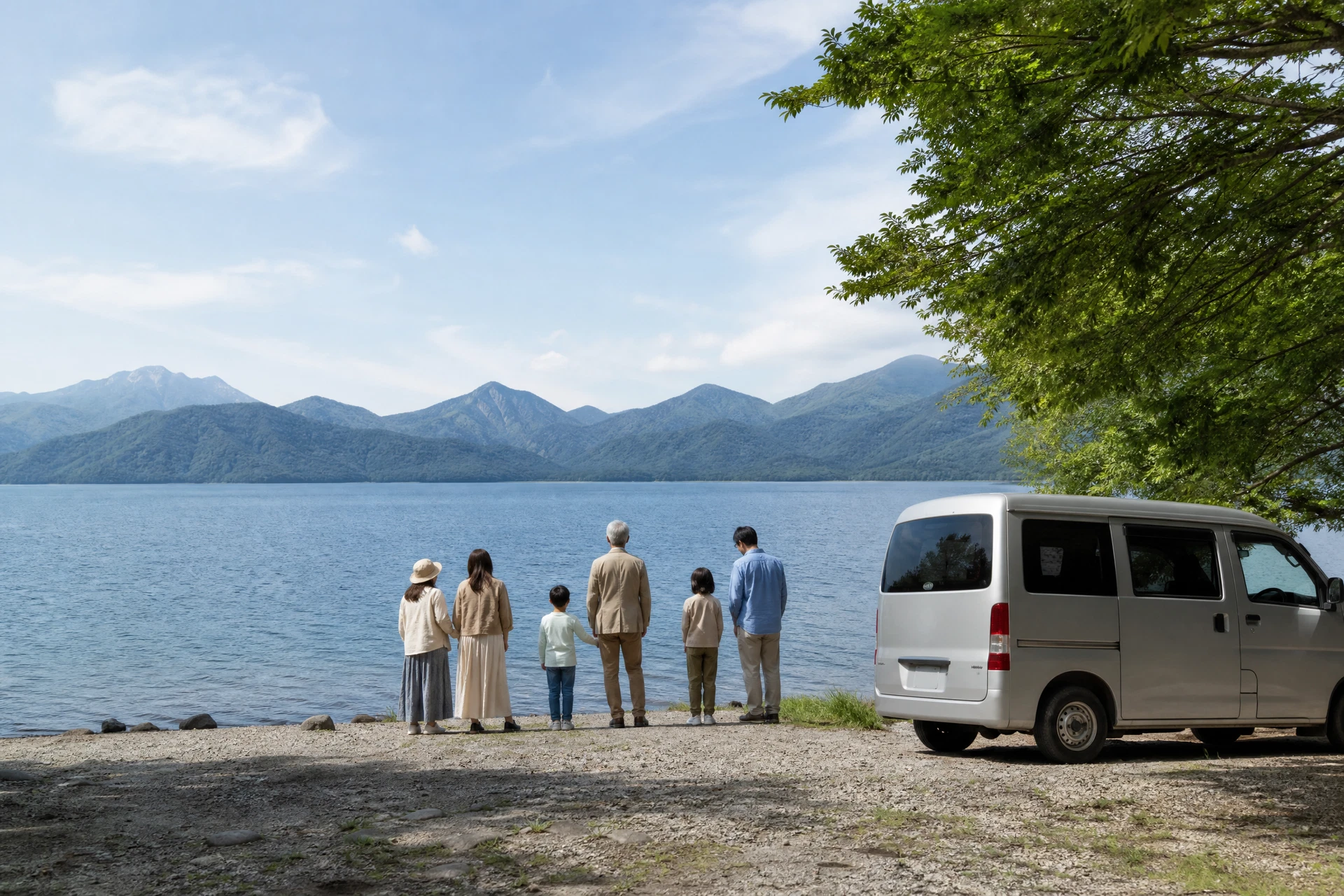
One city base. One change of scene. Plenty of room to breathe.
Official Hokkaido sample routes include practical New Chitose in-and-out plans across several trip lengths; use that flexibility to make a route that feels manageable for your group.[1]
Arrival · settle first
Arrive through New Chitose, transfer to Sapporo or your first base, and keep the evening intentionally light.
City and one great day out
Enjoy Sapporo, then choose one strong excursion such as Otaru or a countryside route rather than several partial ones.
A restorative overnight
Move to an onsen, lake, or scenic region for one night, then return toward the airport without rushing the final morning.
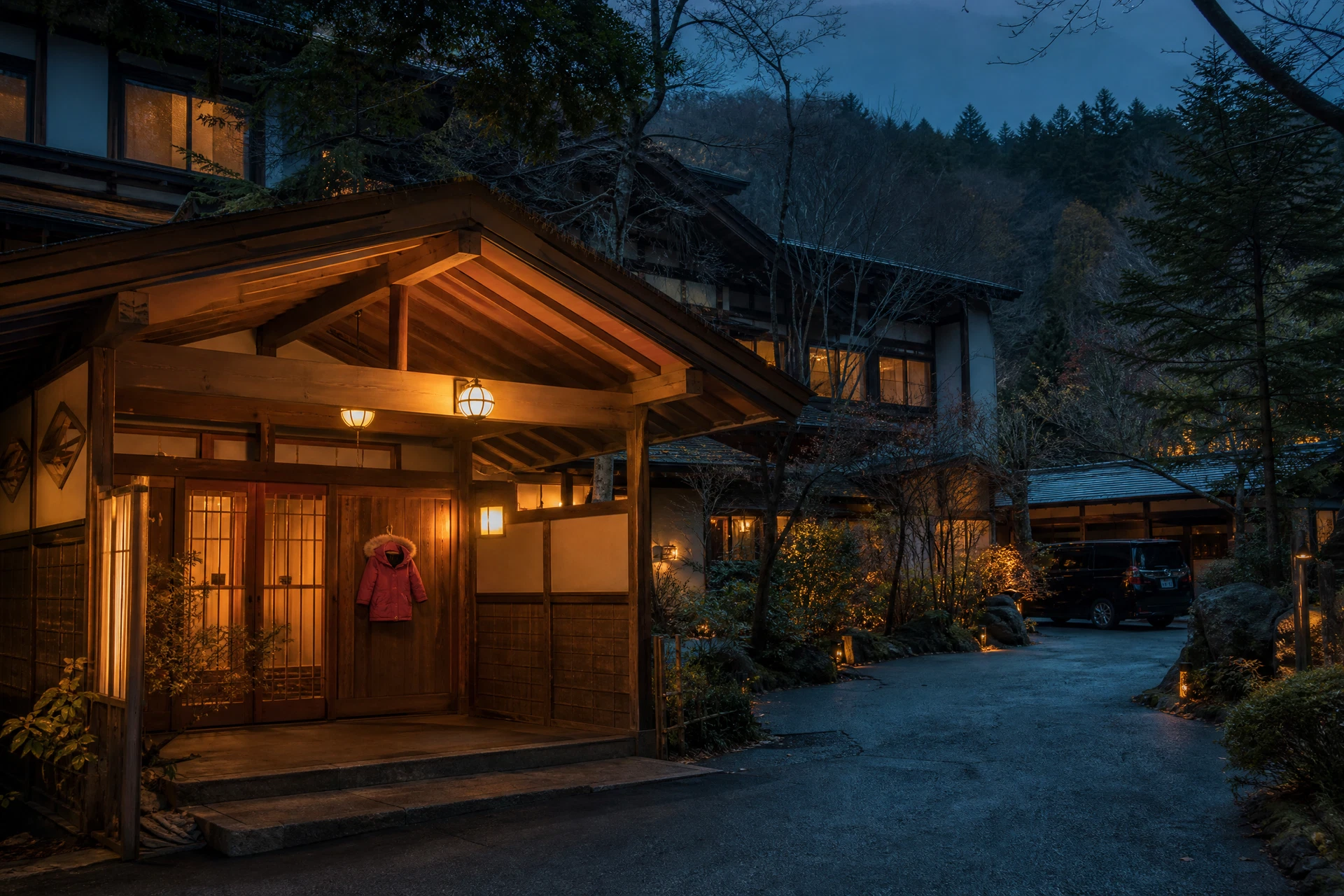
Questions to answer before the road begins.
Is Hokkaido suitable for young children?
Yes, when the route is paced realistically. Fewer hotel changes, one key activity per day, and flexible breaks usually create a much better family experience than trying to cover the whole island.
Can we request child seats?
Yes. Tell us the children’s ages and requirements when you enquire so the appropriate seating can be arranged in advance.
How many hours should a family drive in one day?
There is no single rule, but routes work best when road time is balanced with practical breaks and a meaningful destination. We plan around the group rather than forcing a fixed daily distance.
Is a private driver helpful in winter?
A private driver can make winter routes calmer by reducing navigation and parking pressure, while giving the itinerary more flexibility around weather and pace. Conditions still require sensible allowances.
How many hotel changes are best for a family Hokkaido trip?
For a short stay, one base plus one restorative overnight is usually enough. Add a hotel change only when it unlocks a genuinely different family experience such as an onsen evening or a rural morning.
What should families tell a private driver before booking?
Share children’s ages, child-seat needs, luggage, food timing, nap schedules, mobility requirements, and the kind of stops your family enjoys. These details help turn a route into a comfortable day.
Tell us how your family likes to travel.
Share ages, luggage, preferred pace, arrival time, and the moments that matter most. We will shape a private Hokkaido route around your family—not the other way around.