
Vehicle planning
How to Choose the Right Hokkaido Vehicle for Your Group and Luggage
The right vehicle is the one that leaves passengers and luggage comfortable after the final hotel change, not only at the first airport pick-up.
A Hokkaido route feels better when its pace matches its purpose.
Vehicle choice is usually decided too late. The seat count matters, but luggage shape, hotel changes, child seats, winter clothing and the length of each road day matter just as much.
Hokkaido rewards clarity more than speed. Deciding what your day should feel like—rather than trying to see every pin on a map—creates room for weather, local food, and unexpected stops.
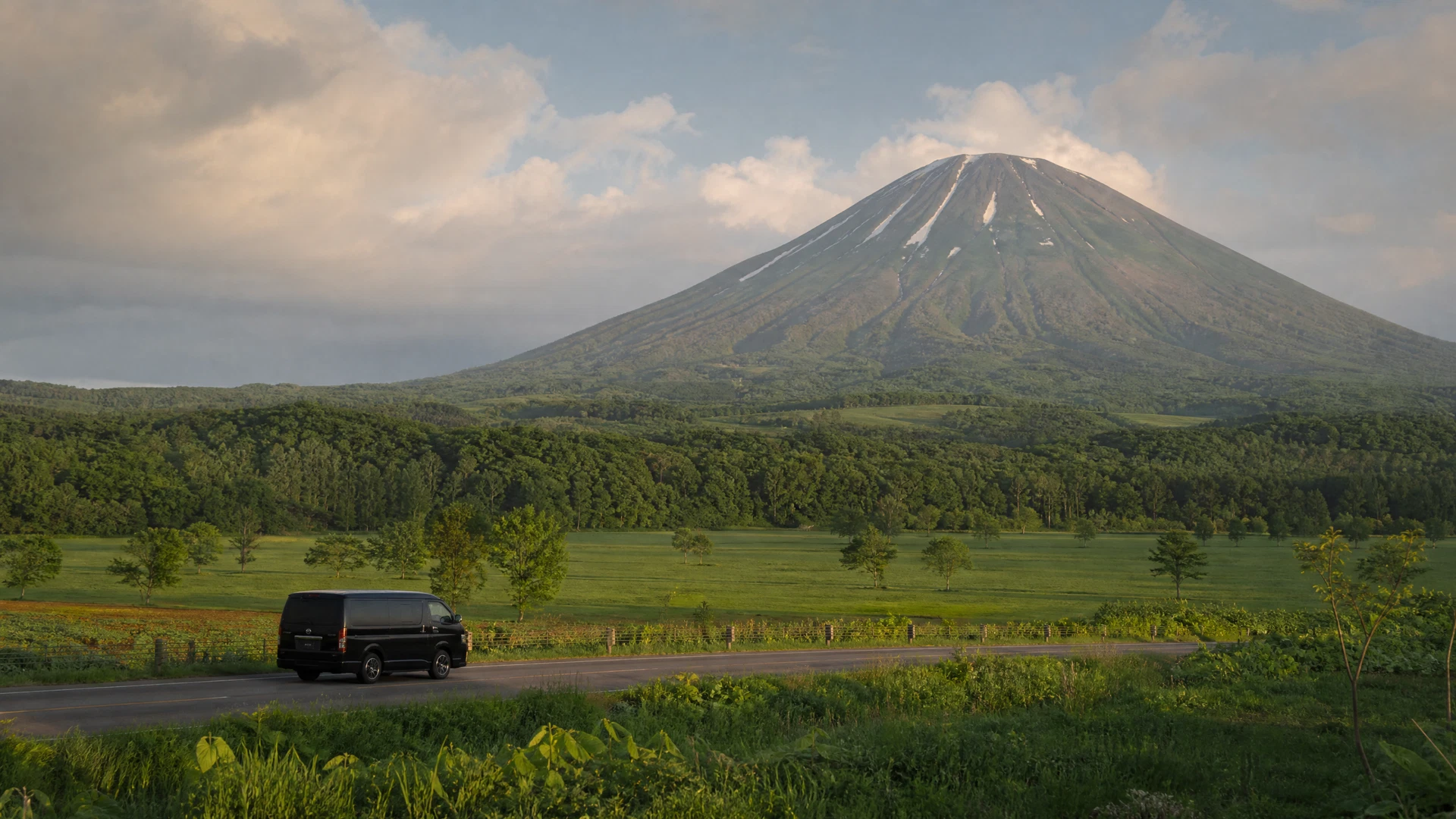
A private car is particularly useful when the road between experiences is part of the experience. It lets the route hold together without asking every member of the group to navigate luggage, timetables, or a rushed hotel change.
Start by listing every item that travels in the vehicle: large cases, cabin bags, strollers, ski equipment, photography gear, folding mobility aids and purchases expected along the way. Two groups with the same passenger count can require very different luggage space.
Use the busiest moment as the planning case—usually airport arrival or a hotel-change morning—not the lightest day after bags have been left at an accommodation. A vehicle that looks suitable for people alone can become uncomfortable if luggage fills the passenger area.
Do not assume a standard suitcase has a standard shape. Send a simple photo or dimensions for unusually large cases, sports equipment or a stroller when seeking a quote. The operator can then confirm a suitable vehicle rather than relying on a generic category name.
A short city transfer and a five-hour scenic day make different demands. Long road days need room to sit comfortably, keep essentials accessible and manage winter layers or rain gear without unpacking the entire vehicle at every stop.
Hotel changes multiply the value of good luggage planning. If the group changes accommodation every night, protect a clear luggage process: what stays accessible, when bags are loaded, and whether the first sightseeing stop occurs before check-in. A slightly larger vehicle can make these transitions far calmer.
In winter, bulky coats, boots and snow gear take up more room than a summer itinerary. In summer, picnic items, camera bags and purchased produce may do the same. Design for the actual season, not only the number printed on a booking form.
Ask the operator to confirm the vehicle based on passengers, luggage and itinerary rather than asking only for a vehicle name. If you need child seats, tell them the children’s ages, heights or required seat type according to the booking process. If mobility is a consideration, describe the assistance needed for entering and exiting.
For groups that value conversation, quiet or sightseeing views, talk about seating rhythm as well as capacity. A comfortable vehicle helps the day feel social instead of compressed, particularly when several generations are travelling together.
Exact makes, models and configurations can vary by availability. The useful promise to request is suitability for the confirmed group and luggage profile. Keep that confirmation alongside the written itinerary and quote so there is no ambiguity on the travel day.

Use the fullest moment of the trip as the vehicle test.
| Travel profile | What increases space needs | What to confirm |
|---|---|---|
| Couple or small group | Large cases, golf or ski equipment, camera bags. | Bag dimensions and the longest road day. |
| Family | Child seats, stroller, snacks, coats and several cases. | The group’s busiest hotel-change or airport day. |
| Multigenerational group | More passengers, mobility aids and a need for easier access. | Passenger comfort, luggage profile and entry and exit needs. |
Three checks before choosing a vehicle
A short, honest briefing prevents most space problems.
List every item
Count large cases, cabin bags, strollers, sports equipment and winter layers—not just passengers.
Describe the hardest transfer
Use airport arrival or the fullest hotel-change morning as the capacity test.
Request written confirmation
Ask for a vehicle suitable for the confirmed group, luggage and any child-seat or mobility needs.

Questions to answer before the road begins.
How much luggage fits in a private vehicle?
Capacity depends on vehicle configuration and bag dimensions. Share your full luggage list to receive a vehicle recommendation.
Should we choose a larger vehicle for a family?
Often yes when a stroller, child seats, multiple large cases or frequent hotel changes are involved. Plan around comfort at the fullest point of the trip.
Can we bring ski or golf equipment?
Tell the operator early and include dimensions or photos if possible. Oversized equipment should never be assumed to fit a standard vehicle.
Are exact vehicle models guaranteed?
Availability can vary. Confirm the required passenger and luggage suitability in writing for your booking.
Choose comfort before the road begins.
Send your group details and luggage profile, and we can help you plan a vehicle that suits the trip rather than only the first transfer.