
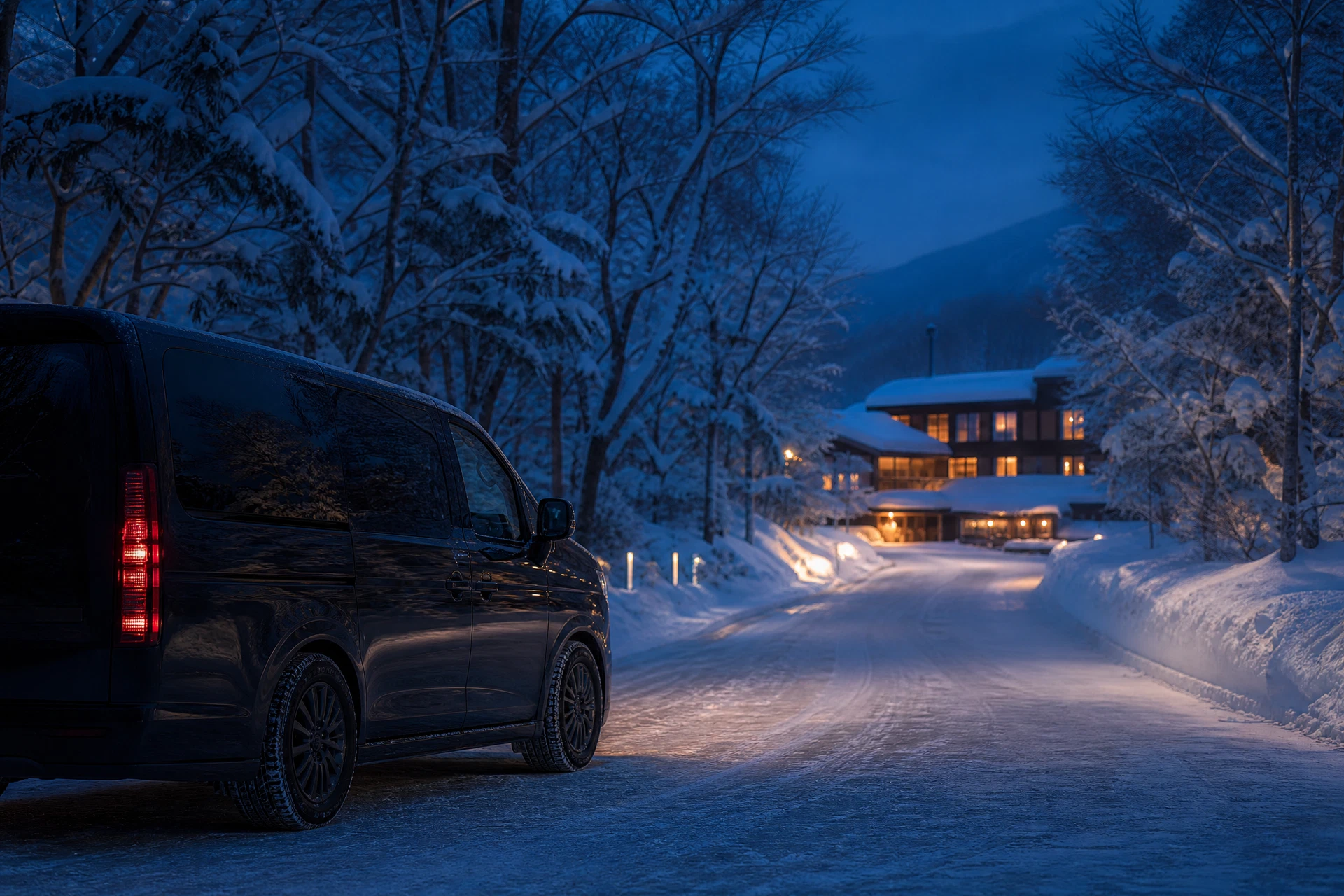
Onsen culture · first visit
Hokkaido Onsen Etiquette: What International Visitors Should Know
An onsen becomes far more relaxing once the simple sequence of changing, washing and bathing is understood before you arrive.
A Hokkaido route feels better when its pace matches its purpose.
Hokkaido’s onsen towns are an important part of a slower journey, but first-time visitors often worry about doing something wrong. The core etiquette is simple: follow the facility’s instructions, wash before entering the bath, keep the bathing area calm, and check individual policies in advance when you have a question.
Hokkaido rewards clarity more than speed. Deciding what your day should feel like—rather than trying to see every pin on a map—creates room for weather, local food, and unexpected stops.
A private car is particularly useful when the road between experiences is part of the experience. It lets the route hold together without asking every member of the group to navigate luggage, timetables, or a rushed hotel change.
Policies vary by facility, especially for tattoos, private bathing options, towels and day-use procedures. Check the specific onsen or hotel directly before travel rather than assuming one property’s rule applies everywhere.
At a typical onsen, men’s and women’s baths are separate. The Sapporo official visitor guide explains that clothes are removed in the changing room, valuables are stored in a locker, and photographs are not taken in the changing or bathing area.[1]
Bring only what the facility asks for. Hotels may provide towels in the room or bath area; day-use facilities may have different arrangements. A small towel is generally used in the bathing area, not a swimsuit.
The shower or washing area comes before the bath. Wash and rinse thoroughly, then enter the bath without soap or shampoo. This is a shared water space, not a place to complete your washing routine.
Keep the small towel out of the bath water. The official Sapporo guide notes that visitors should not swim, run, dive, shout or lie on the floor; the bath is meant to be enjoyed quietly.[1]
Move at a measured pace. An onsen is not a test of how long you can stay in hot water. If you feel uncomfortable, step out, hydrate and rest.
Wipe excess water from your body before returning to the changing room so floors remain dry. Collect belongings carefully and make sure your next transfer or meal does not force a rushed exit.
If your itinerary includes an onsen after a long road day, make the evening lighter. A simple dinner, early return and an unhurried bathing window often make the experience more enjoyable than a late, overfull schedule.
A private driver can make an onsen stop easier to place in a wider route, but every onsen’s current policies and operating details should be confirmed with the property.
A simple sequence for a respectful first visit
| Moment | What to do | What to avoid |
|---|---|---|
| Changing room | Store clothes and valuables; follow signs. | Photographs or bringing phone/camera into bathing areas. |
| Before the bath | Wash and rinse at the shower area. | Entering the bath with soap or shampoo on your body. |
| In the bath | Soak quietly; keep towel out of the water. | Swimming, loud conversation, running or diving. |
Three checks that remove most uncertainty
Preparation is respectful to both the facility and other guests.
Check the facility policy
Confirm current tattoo, towel, private-bath and day-use details directly.
Learn the bathing sequence
Change, wash and rinse, soak quietly, then dry before returning to the changing room.
Protect the evening
Leave enough time before dinner or bed so the visit feels calm rather than rushed.
Questions to answer before the road begins.
Do I wear a swimsuit in a Hokkaido onsen?
Most traditional bathing areas require nudity; always follow the individual facility’s current rules.
Can I visit if I have tattoos?
Policies differ. Ask the specific property in advance about its current tattoo policy or private-bath options.
Can I take photos in an onsen?
No photographs should be taken in changing or bathing areas.
What should I do before entering the bath?
Wash and rinse your body at the shower area, then enter the bath without soap or shampoo.
Place an onsen evening naturally into your Hokkaido route.
Share your hotel, route and preferred pace. We can help plan a transfer that gives your onsen stay the calm it deserves.