

Onsen country · south-west Hokkaido
Noboribetsu and Lake Toya: How to Plan an Onsen and Volcano Escape
Pair the steam and mineral character of Noboribetsu with Lake Toya’s open water, volcanic horizons, and an itinerary that leaves room to actually soak.
A Hokkaido route feels better when its pace matches its purpose.
Noboribetsu and Lake Toya work best as one slow volcanic story: one place is intimate, mineral-rich, and shaped by steam; the other is broad, lakeside, and framed by the living geology of Mt. Usu.
Hokkaido rewards clarity more than speed. Deciding what your day should feel like—rather than trying to see every pin on a map—creates room for weather, local food, and unexpected stops.
A private car is particularly useful when the road between experiences is part of the experience. It lets the route hold together without asking every member of the group to navigate luggage, timetables, or a rushed hotel change.
Noboribetsu is most rewarding when you give it an unhurried afternoon and evening. Hell Valley’s volcanic landscape makes sense before or after check-in, but the point of an onsen town is not to race through its steam vents before moving on. Allow time for a short walk, a meal, and a bath without turning the stay into an attraction checklist.
Lake Toya changes the scale of the trip. The official Lake Toya tourism information describes a lakeside resort set among volcanic landscapes, with Mt. Usu and Showa Shinzan close enough to make the region’s geology visible in the day itself.[1] This is a good place to choose a room for its view, take an evening walk, and leave a lighter morning rather than immediately driving away.
Together, the two places create contrast: concentrated geothermal energy in Noboribetsu and a calmer lake-and-volcano panorama at Toya. That is why a two-night plan usually feels more natural than attempting both as stops in one long day. A private car can connect them comfortably, but it cannot make a rushed overnight feel restorative.
The strongest plan gives each onsen town one evening of its own—not one photo stop shared between two check-ins.
For a dedicated escape, arrive through New Chitose, travel first to Noboribetsu, then continue to Lake Toya, and leave through New Chitose or continue south toward Hakodate. The order is flexible; what matters is avoiding a late arrival at both hotels. A late flight may make a city or airport-adjacent first night the wiser decision before the onsen chapter begins.
If the journey continues to Hakodate, Lake Toya makes a useful bridge rather than a detour. Lake Toya’s tourism association lists access by road from Sapporo, New Chitose, and Hakodate, which makes it a natural pause in a south Hokkaido route.[2] Treat those published drive estimates as a starting point, then add time for luggage, roadside stops, weather, meals, and the simple pleasure of not arriving at dinner exhausted.
The most common planning error is spending the whole first day transferring and then expecting the onsen to repair the pace. Instead, pick one primary outdoor experience per day. Hell Valley or a local walk can anchor Noboribetsu; the ropeway, lakefront, cruise, or a relaxed café can anchor Toya. Everything else should support the feeling of the place.
Cloud can soften a lake view, but it can also make the volcanic atmosphere around Noboribetsu feel more immediate. Rain is a reason to move the bath, a museum, a long lunch, or hotel time earlier—not a reason to write the day off. In clear weather, use the better window for the viewpoint or ropeway, then protect the evening for the onsen.
From late April through October, Lake Toya’s official tourism information notes an evening fireworks program. It is worth checking the current schedule directly before building dinner around it, because seasonal operations can change.[1] In autumn, color and cooler air make a slower lakeside stay attractive; in winter, build more daylight margin and avoid treating a mountain or coastal road as a fixed-hour appointment.
Tell your driver what is non-negotiable: perhaps a specific ryokan, a crater view, an evening walk, or a quiet breakfast by the lake. Once that is clear, the route can be adjusted around current conditions without losing the reason you came.
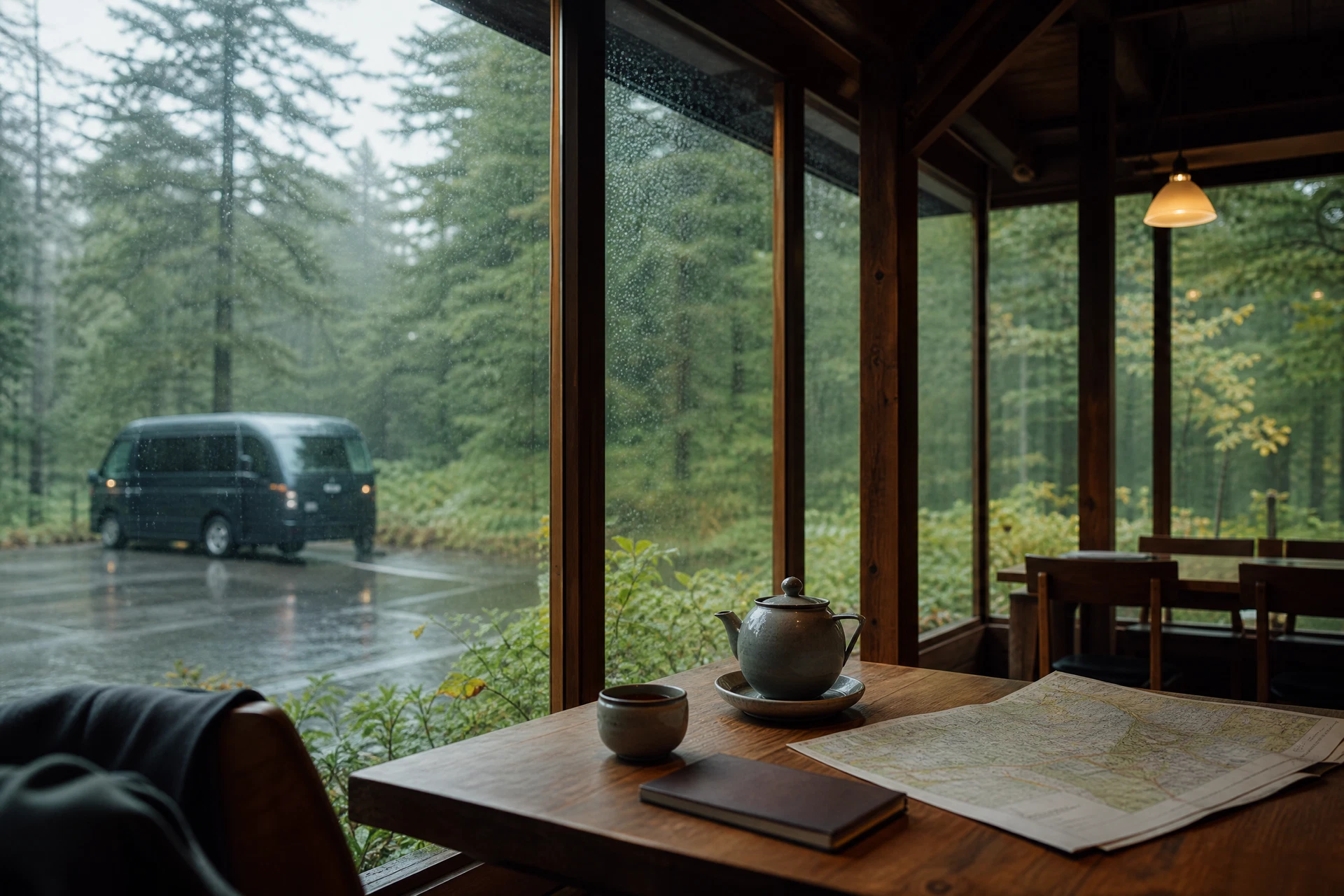
One geothermal town, one lake night, one generous margin.
The itinerary becomes calmer when every major landscape gets its own time of day.
Protect the first onsen evening
Reach Noboribetsu early enough to walk, eat, and soak without arriving in a rush.
Turn the transfer into the scenic day
Move to Lake Toya after a considered morning and leave space for viewpoints, lunch, and weather.
Keep the departure day light
Use the lake morning for a view, a bath, or an easy walk before the next long journey.
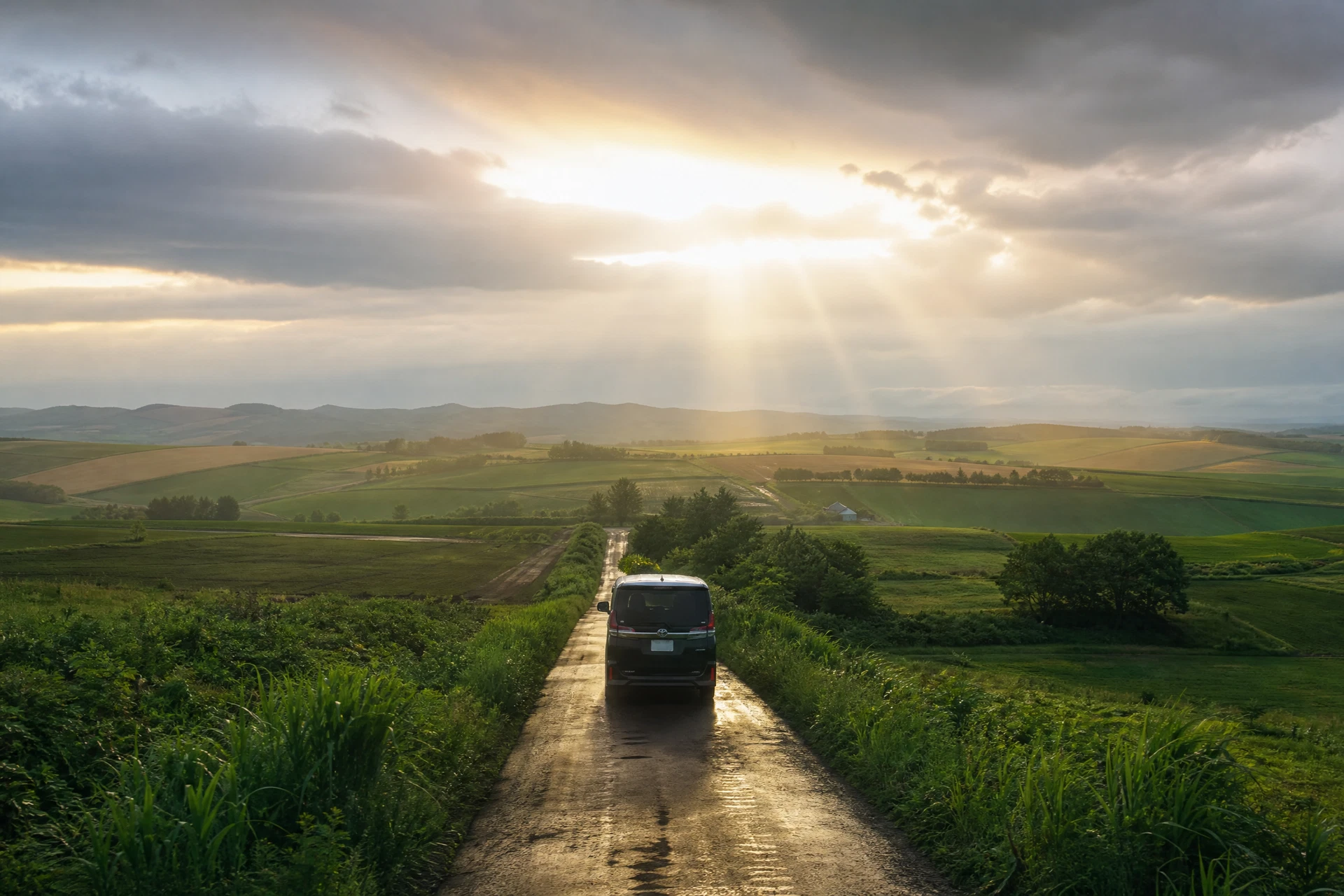
Questions to answer before the road begins.
How many nights do Noboribetsu and Lake Toya need?
Two nights is a strong minimum when you want one evening in each place. Add a third night if the route also includes Hakodate, a slower pace, or a weather margin.
Can both places be done on a day trip?
It is possible as transport, but it is not the best way to experience two onsen regions. A day trip tends to turn baths, meals, and lake time into a schedule rather than a break.
When is the best season for Lake Toya and Noboribetsu?
Each season works differently: greener lake days in spring, long evenings in summer, color in autumn, and a more intimate onsen atmosphere in winter. Check current road and facility information near travel dates.
Why use a private car on this route?
A private car is useful when the day includes hotel luggage, two regions, changing weather, and a desire to stop without building the route around fixed transfers.
Build your volcanic Hokkaido escape around the moments that matter.
Share your arrival point, preferred ryokan style, dates, and pace. We will shape a private route that makes the road, the lake, and the onsen feel like one journey.