
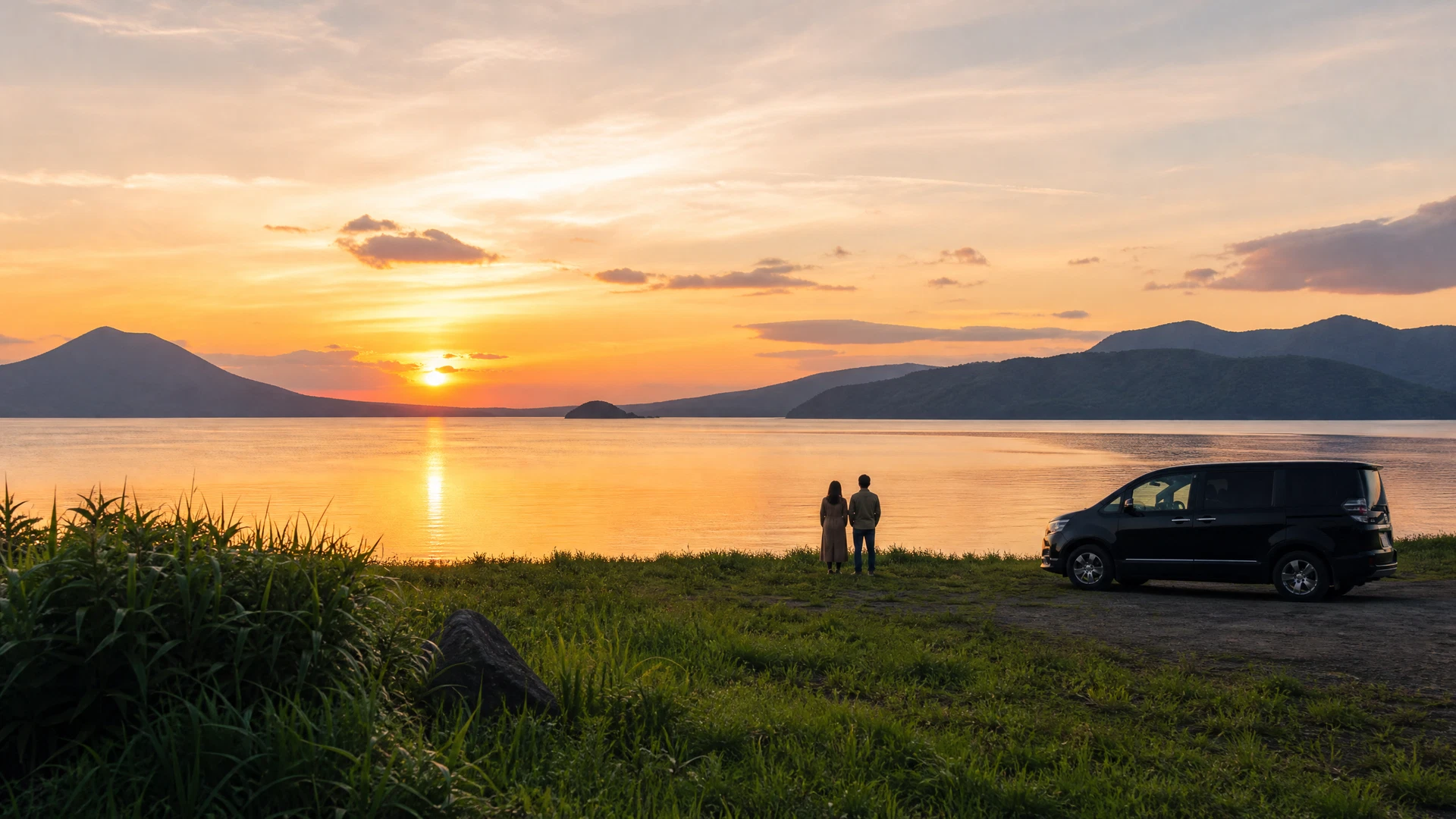
For two · a slower Hokkaido
Hokkaido for Couples: Building a Slow, Scenic, and Personalised Escape
Less checking in. Less watching the clock. More time for landscapes, long lunches, and the road between them.
A Hokkaido route feels better when its pace matches its purpose.
A romantic Hokkaido itinerary is not made by adding more experiences. It is made by allowing a few good experiences to last long enough to become yours. Choose a route that has a clear emotional rhythm: an easy first evening, one stay that feels restorative, and a final road day with room for weather, appetite, and an unplanned stop.
Hokkaido rewards clarity more than speed. Deciding what your day should feel like—rather than trying to see every pin on a map—creates room for weather, local food, and unexpected stops.
A private car is particularly useful when the road between experiences is part of the experience. It lets the route hold together without asking every member of the group to navigate luggage, timetables, or a rushed hotel change.
Hokkaido’s scale makes it tempting to chase contrast: city, coastline, lavender fields, mountain resort, volcano, and port town in one short journey. For two people, the better route is often more selective.
Start with one atmosphere you want the trip to hold: a port-city beginning, a lake-and-onsen interlude, a rural food route, or a slow coastal finish. Then choose two or three places that deepen that mood.
The most personal escape is often built from one deliberate overnight.
A beautiful road is different when you can stop for coffee, look at the weather, or take the long way to a local lunch. A private driver gives you the option to let a good moment last without worrying about a return timetable.
Leave empty space in the route. That may become a glass studio in Otaru, a quiet lane in Hakodate, a farmhouse table in Furano, or simply more time at the lake outside your ryokan.
For a four- or five-night trip, resist the urge to add a third hotel simply for variety. One city base plus one meaningful scenic overnight creates more shared time than a rapid sequence of check-ins.
The most memorable evenings do not require a packed program. They need a hotel you are pleased to arrive at, a meal that feels connected to place, and enough time after dinner to walk, talk, or do nothing.
A well-placed onsen stay creates that pause naturally. Use it between city and countryside chapters, rather than treating it as a quick stop on an already long drive.
Winter is strongest when the route is compact: an easy arrival, a snow or onsen chapter, and generous time around meals. Spring suits travellers who value late blossoms, quieter roads, and a sense of beginning rather than peak-season intensity. Summer gives you more daylight for lakes, farms, coastlines, and detours, while autumn works beautifully for a slower rhythm of foliage, harvest food, and restorative overnights.
Once the season is clear, choose a simple shape. A four-night escape can be a Sapporo or Hakodate beginning plus one onsen or coastal overnight. Five nights can add a countryside chapter without asking every day to be a driving day. Six or seven nights can become a one-way story, such as Hakodate to Sapporo through a lake or onsen region, rather than a return loop.
The practical test is whether every hotel change improves the mood of the trip. If it does not create a better morning, a better evening, or a more beautiful road between them, stay one more night where you are. A private driver is useful here because the transfer itself can contain a seasonal lunch, a viewpoint, or a local craft stop without turning into a checklist.
For two people, the right itinerary leaves room for the day to become more interesting than the plan.
A satisfying day for two often needs only one anchor and one atmosphere. The anchor could be an old port district, a private onsen arrival, a lake road, a local lunch, or a coastline at the right time of day. The atmosphere comes from allowing the road between those moments to remain unplanned enough for coffee, a small gallery, a farm stand, or a view that is better than expected.
When choosing accommodation, ask what you want to do after checking in. If the answer is walk to dinner and explore a neighbourhood, stay in the city. If the answer is settle into a bath, watch the light change, and sleep without another decision, choose an onsen or lakeside hotel. If the answer is wake up to a quiet rural view, make the countryside stay the destination rather than a stop between two cities.
This approach also improves the final day. Instead of saving a distant attraction for the morning of departure, choose one local breakfast, a small final walk, or a direct scenic transfer that ends near the airport. The journey finishes with the same calm pace that made the middle of the trip memorable.
A romantic route is not about doing less; it is about making the time between plans feel like part of the trip.
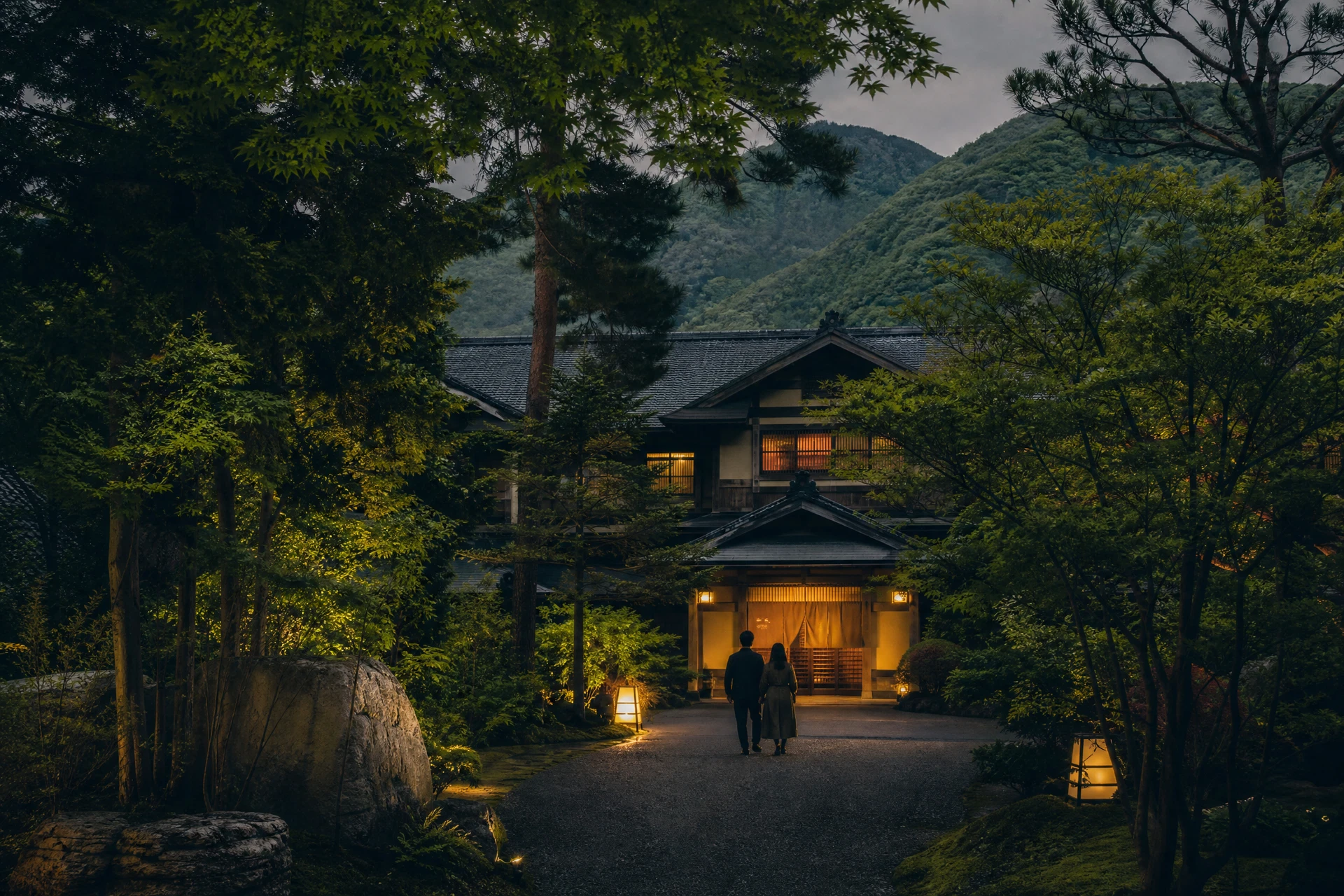
City energy, a restorative chapter, and a scenic finish.
Build the journey in chapters so every change of place brings a different texture without breaking the calm.
Sapporo or Hakodate · arrive with character
Begin in a city that invites a gentle first evening: good food, a walkable district, and a comfortable hotel.
Lake or onsen · stay rather than pass through
Move to a scenic overnight where dinner, bath, and morning view are the point of the day.
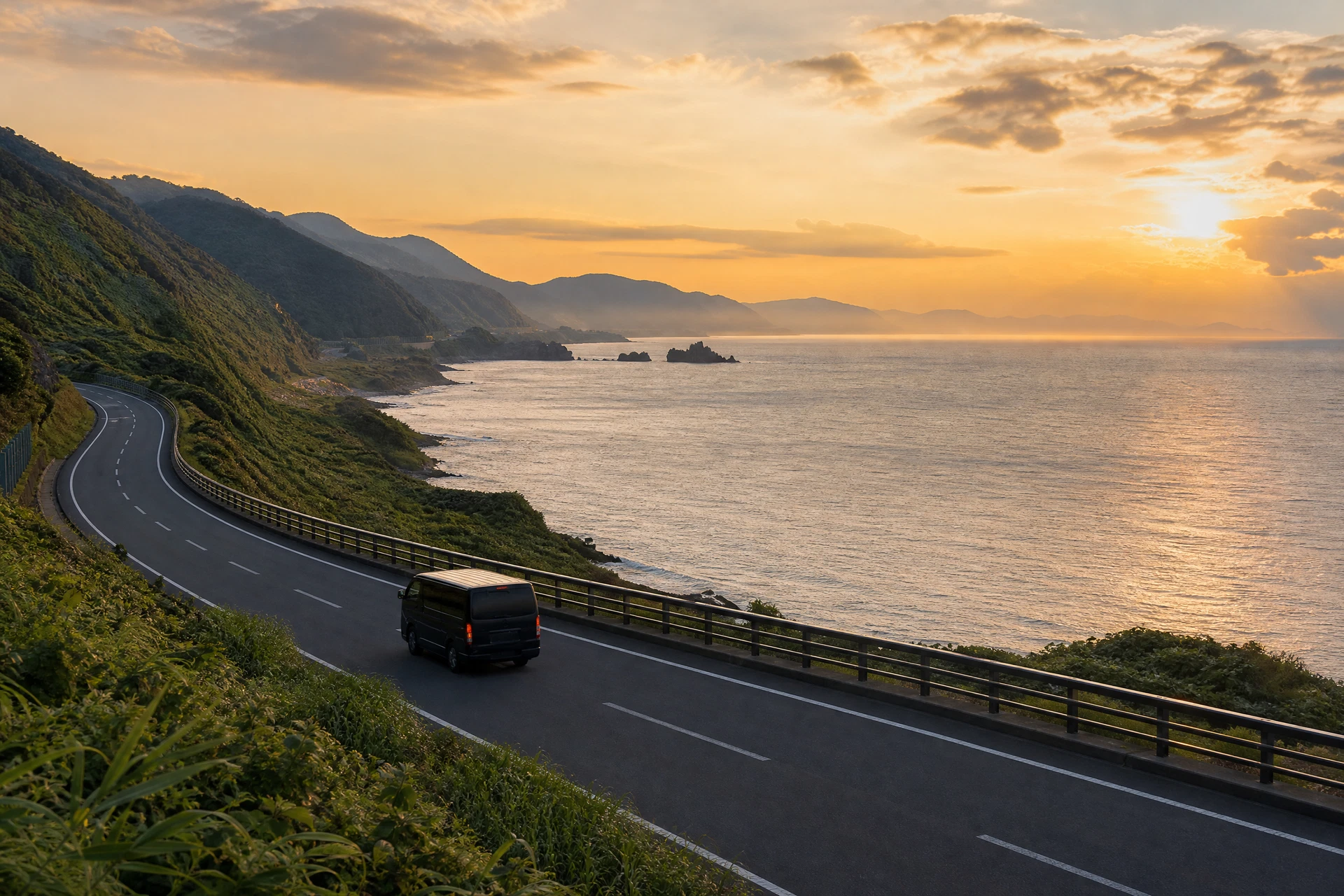
Countryside or coast · leave room for the last day
Finish with a road that can absorb a local lunch, a viewpoint, and a leisurely airport transfer.
Questions to answer before the road begins.
What is the best Hokkaido route for couples?
The best route follows the feeling you want: city and food, an onsen and lake, a rural road, or a southern port-city journey. Choose one dominant mood and do not dilute it with too many hotel changes.
How many nights are ideal for a couples trip to Hokkaido?
Four or five nights allow a city, a scenic overnight, and a flexible final chapter. Shorter trips can still work well when focused around one base and one regional experience.
Can a private driver plan a romantic Hokkaido itinerary?
Yes. Share the landscapes, meals, pace, and accommodation style you value. We can design the road time, stops, and hotel transitions around a quieter, more personal rhythm.
Should couples include an onsen stay?
An onsen stay is often a strong addition because it turns the evening into part of the journey. It works best as a full overnight rather than a short diversion between long transfers.
Which season is best for a Hokkaido couples trip?
Choose winter for snow and onsen atmosphere, summer for open roads and long light, autumn for colour and slower regional stays, or spring for quieter roads and late blossoms. The best season is the one that matches the mood you want to protect.
How should couples pace a private Hokkaido itinerary?
Give each day one anchor: a city neighbourhood, scenic road, onsen arrival, or memorable meal. Keep the remaining hours flexible so a viewpoint, lunch, or good weather can become part of the day rather than a rushed detour.
Let the scenery set the pace.
Tell us how you want your time in Hokkaido to feel. We will build a private route with the space to linger where it matters.