

South Hokkaido · road journey
From Hakodate to Sapporo: A South Hokkaido Road Journey at Your Own Pace
The best route from Hakodate to Sapporo is not a race north. It is a sequence of port-city evenings, lake mornings, volcanic landscapes, and one well-chosen overnight.
A Hokkaido route feels better when its pace matches its purpose.
Hakodate to Sapporo is a journey with enough variety to deserve more than a single transfer day. Give the road two or three chapters, and southern Hokkaido becomes a route of changing landscapes instead of a distance to get through.
Hokkaido rewards clarity more than speed. Deciding what your day should feel like—rather than trying to see every pin on a map—creates room for weather, local food, and unexpected stops.
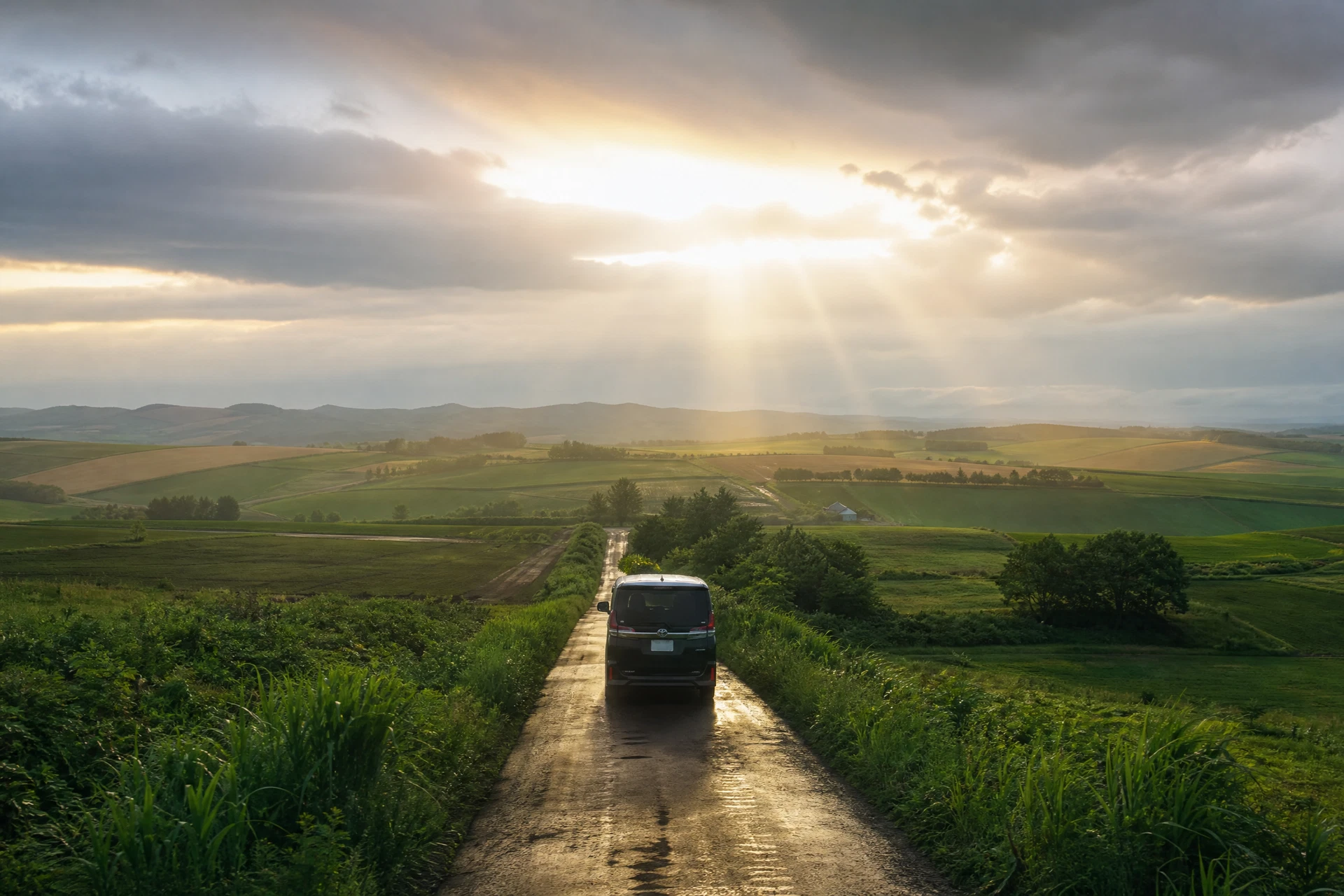
A private car is particularly useful when the road between experiences is part of the experience. It lets the route hold together without asking every member of the group to navigate luggage, timetables, or a rushed hotel change.
Hakodate is an excellent opening base because its food, historic streets, market rhythm, and night views are concentrated enough to be enjoyed without a vehicle-heavy itinerary. JNTO highlights the city’s seafood, Motomachi, Mt. Hakodate, and the nearby nature of Onuma as key parts of the southern Hokkaido experience.[1] That mix makes it a natural place to recover from a flight or train, not merely collect a rental car and leave.
A practical arrival day should have one anchor: a market breakfast after an early arrival, a walk through Motomachi, a waterfront dinner, or a night-view plan if weather permits. Do not try to fit all of them around baggage and check-in. The city feels most generous when it is allowed to be the first chapter, rather than the preface to the road trip.
If a departure from Hakodate is early the next morning, choose a hotel and evening that make that start easy. If it is late, use the extra time for an unhurried city morning and start the drive after lunch. The itinerary should follow the arrival reality, not an idealized day-one map.
Onuma works beautifully as a shorter stop from Hakodate because its lakes and small islands shift the journey from urban port to open landscape. It can be a gentle first drive, a lunch-and-walk chapter, or an overnight when the group wants to start slowly. JNTO specifically positions Hakodate as a gateway to Onuma and other southern Hokkaido nature, which is a useful reminder that the road begins before the long northbound section.[1]
Lake Toya is where a two- or three-night route starts to feel balanced. The lake, Mt. Usu, onsen hotels, and seasonal evening atmosphere offer an arrival worth planning around. Avoid turning it into a sunset stop followed by another long drive. A lake-facing breakfast or a late-morning departure can make the overnight feel like part of the route rather than a necessary interruption.
If time is short, choose one meaningful middle stop. If time allows, use both: Hakodate for city character, Onuma for a soft outdoor transition, and Toya for an onsen evening. You will see less on paper than an all-day drive might promise, but remember more of what you do see.
The final leg to Sapporo should not be treated as a final exam. Keep the morning before it light, especially after an onsen stay. A lingering breakfast, a lake walk, or one short viewpoint is often enough before continuing north. If conditions are poor, leave earlier and make Sapporo the day’s reliable comfort rather than forcing a scenic stop.
Sapporo is especially useful at the end of a southern route because it reconnects the journey to rail, airport access, dining, and other regional possibilities. You can finish there, or use it as a base for Otaru, Furano, Niseko, or a return to New Chitose. Read the city as a useful conclusion, not a compromise after the countryside.
A private driver is valuable on this route when you want luggage, accommodations, viewpoints, and meal stops to flow as one journey. Describe the places you care about most, then protect one flexible window each day. That is how the road stays personal when weather, timing, or an unexpected stop changes the original order.

City evening, landscape transition, lake overnight, calm arrival.
The route works because every overnight solves a different part of the journey.
Begin with a real Hakodate stay
Give the city one evening and one clear priority before you start driving.
Choose one or two middle chapters
Use Onuma for a softer start and Lake Toya for a night that earns its place.
Finish without racing
Leave the final morning open enough that Sapporo still feels like an arrival, not a recovery.
Questions to answer before the road begins.
How many days are ideal from Hakodate to Sapporo by private car?
Three nights gives the route a strong pace: Hakodate, a southern nature or lake chapter, and an onsen or Sapporo finish. Two nights can work with fewer stops; add time for a slower pace.
Is Onuma worth including?
Yes when you want to break the transition from Hakodate gently. It is especially useful for travellers who value a short scenic day rather than beginning with a long drive.
Can Lake Toya fit between Hakodate and Sapporo?
Yes. It is a natural lake-and-onsen pause, but it deserves an overnight if you want to experience it rather than simply pass through.
What should change in winter?
Leave more daylight margin, reduce the number of fixed stops, check current road information, and protect the accommodation plan rather than chasing every viewpoint.
Turn Hakodate to Sapporo into a route with its own story.
Share your dates, hotel preferences, arrival point, and the pace you enjoy. We will shape a private south Hokkaido road journey around them.