
Route design · three Hokkaido chapters
How to Balance Cities, Onsen, and Nature in One Hokkaido Journey
A city gives the trip energy. An onsen gives it pause. Nature gives it perspective. The route works when each has its own time.
A Hokkaido route feels better when its pace matches its purpose.
The trick is not to divide your trip equally between cities, onsen, and nature. It is to let each one do a different job in the story of your journey. The city should make arrival easy, the onsen should break up the road, and the nature chapter should have enough daylight and weather flexibility to feel spacious rather than scheduled.
Hokkaido rewards clarity more than speed. Deciding what your day should feel like—rather than trying to see every pin on a map—creates room for weather, local food, and unexpected stops.
A private car is particularly useful when the road between experiences is part of the experience. It lets the route hold together without asking every member of the group to navigate luggage, timetables, or a rushed hotel change.
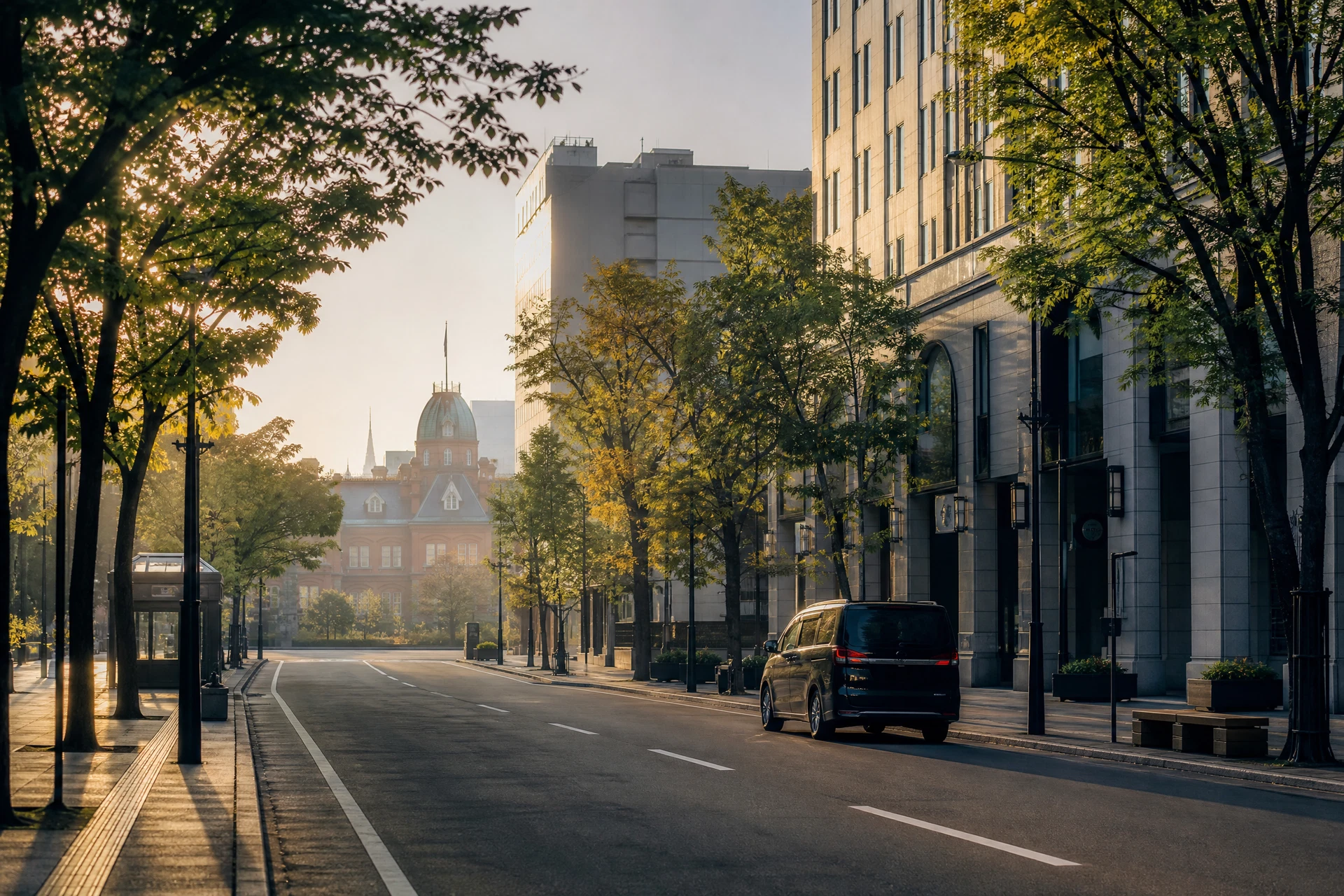
Sapporo and Hakodate are not simply places to sleep before heading somewhere more scenic. They are where the route acquires texture: markets, architecture, local beer, small bars, morning walks, and meals that make the region feel specific.
Give the city at least one unhurried evening and one clear half-day. That is usually enough to settle into the trip without letting urban stops absorb the landscape time you came for.
A city should open the journey, not consume it.
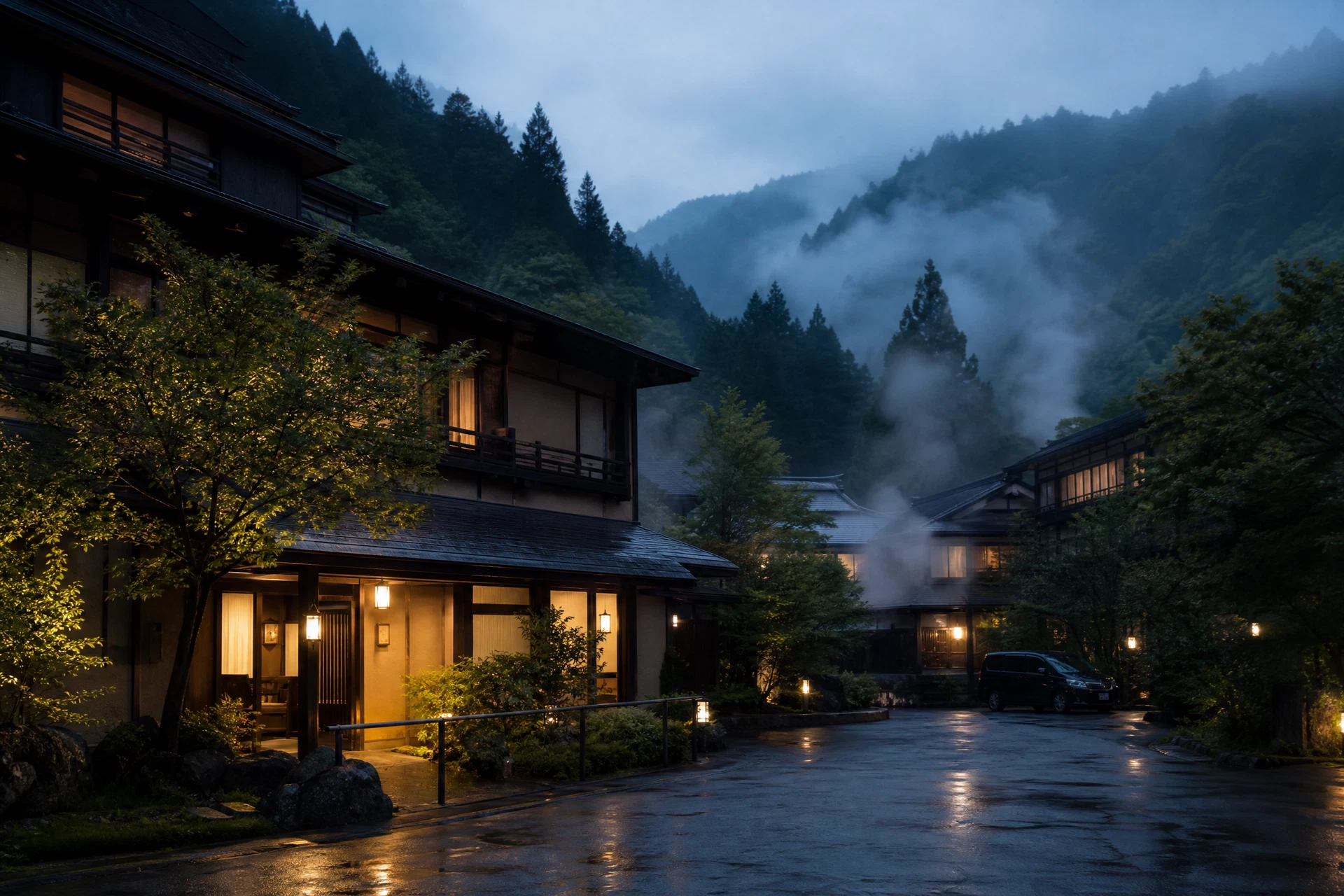
An onsen works especially well after a city chapter and before a long scenic day. It changes the cadence: you arrive before dark, soak, eat, sleep deeply, and leave with a slower morning rather than another rushed check-out.
Noboribetsu and Lake Toya are natural examples for a central Hokkaido route, while Yunokawa can soften a Hakodate chapter. Choose the onsen based on where it sits in the road, not only on a list of famous names.
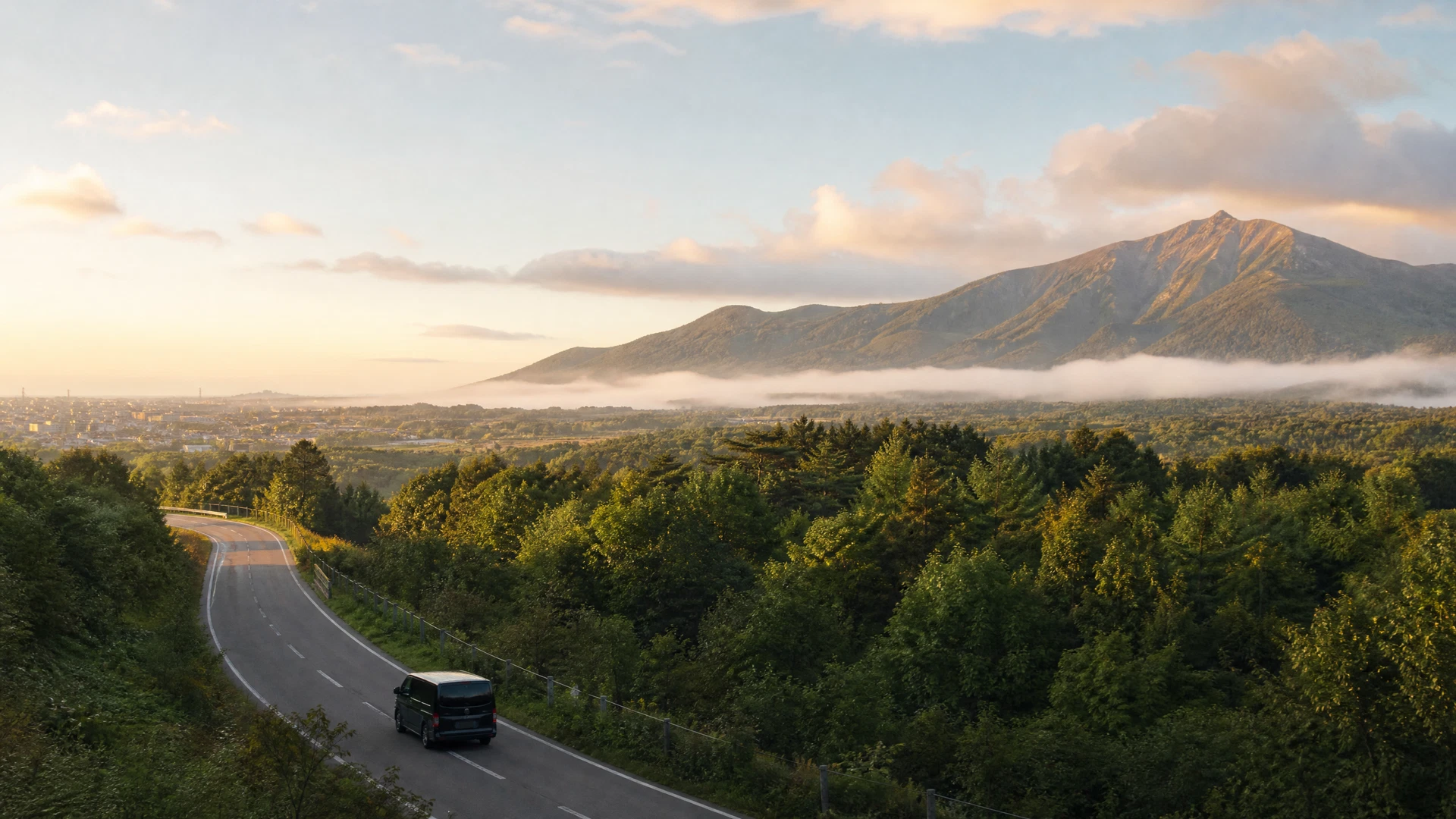
Nature needs time for weather and distance. A lake, coast, mountain road, or countryside region loses its appeal when it is squeezed between airport transfers and a fixed dinner reservation.
Make the open-air chapter a full day or an overnight. That creates room for an early start, a rural lunch, a short detour, and the luxury of changing the plan when the light improves.
For four nights, keep the city, onsen, and nature chapters in one corridor. For five or more, add a second regional overnight only if it removes backtracking and gives the next morning a genuinely different landscape.
A balanced route can look different depending on where you land. From New Chitose, Sapporo can be the opening chapter, an onsen town such as Noboribetsu or Lake Toya can sit in the middle, and a rural or waterside day can follow without retracing the same road. From Hakodate, a southern city-and-onsen combination may come first before the trip moves north. The right order is the one that turns each transfer into a gradual change of landscape.
For four nights, choose one city, one restorative overnight, and one full open-air day in the same region. For five nights, keep two city nights, add one onsen reset, and allow two nights for a scenic chapter or a relaxed return. For a week, use an open-jaw structure where possible: begin in the south or at an airport near the first experience, then travel in one direction toward the departure point.
Avoid dividing every trip into equal thirds. A city only needs as much time as your food, culture, and arrival energy require. An onsen needs a full evening and morning to do its work. Nature benefits most from daylight, weather flexibility, and an overnight nearby. When each chapter is given the time it naturally needs, the whole itinerary feels less like a compromise.
The balance is not one-third city, one-third onsen, and one-third nature. It is the right sequence of energy, pause, and space.
The day you leave the city or onsen is often the most useful place to add nature. Rather than treating it as lost time, choose one route with a clear rhythm: a late city breakfast, a viewpoint or local lunch on the road, then an arrival early enough to enjoy the next accommodation. This turns a hotel change into a day with its own memory rather than a gap between highlights.
Season changes what this chapter needs. In winter, choose a shorter route and a hotel arrival that leaves room for conditions. In summer, use the long daylight to allow a rural lunch or a short walk, but avoid assuming every open road will be quick. In spring and autumn, leave a flexible stop for weather and seasonal light. The goal is not to chase every scenic point; it is to give one landscape enough time to feel like a chapter of the trip.
A private driver can be especially useful on these linking days because luggage, food stops, viewpoints, and the hotel handoff can live in one continuous plan. The driver day need not be the busiest day. Often it is the day that makes the rest of the itinerary feel joined together.
A well-designed transfer creates a gradual change of pace, not a break in the journey.
City, onsen, nature—then a calm return.
Official Hokkaido route ideas regularly combine central cities, onsen regions, and open-air experiences across multi-night journeys. The important part is to give every chapter a purpose.[1]
Two nights · city base
Arrive through New Chitose, settle in Sapporo, and enjoy the city without trying to turn it into a transit lounge.
One night · onsen reset
Move south or west to an onsen or lakeside chapter. Arrive with enough daylight to make the setting part of the experience.
Two nights · nature and departure
Follow with a scenic drive or regional overnight, then return toward the airport with a final day that has room for weather and small discoveries.
Questions to answer before the road begins.
Can I see a city, an onsen, and nature in four days?
Yes, if the route is geographically focused. Use one city base, one nearby onsen or lake overnight, and one major nature day rather than trying to cover separate corners of Hokkaido.
Which onsen works best with a Sapporo itinerary?
The best choice depends on the direction of your next destination. Noboribetsu and Lake Toya work well for a southern or western chapter; other choices may fit better when your route heads toward Furano, Niseko, or Hakodate.
Should I spend more time in cities or nature?
For a first trip, use cities to structure arrival and departure, then protect at least one full day for an open-air region. The balance should follow your interests, season, and tolerance for hotel changes.
How can a private driver help with a multi-chapter route?
A private driver can link city hotels, onsen stays, scenic roads, lunches, and luggage in one continuous journey. This is especially useful when the move between regions should feel like a day out, not a lost day.
How many nights do I need to balance cities, onsen, and nature?
Four nights can work for one city base, one onsen night, and one open-air day when the route is geographically focused. Five or more nights make it easier to give each chapter its own pace.
What is the best order for city, onsen, and nature in Hokkaido?
A reliable shape is city first to settle in, onsen in the middle to reset, and nature when you have a full day or overnight to absorb weather and distance. Reverse the order only when your airport or season makes another route more logical.
Let each chapter of Hokkaido do its own work.
Share your dates, arrival point, and the mix of city energy, restorative onsen, and landscape you want. We will shape the route around a pace that feels right.