
01
Take in the brickwork
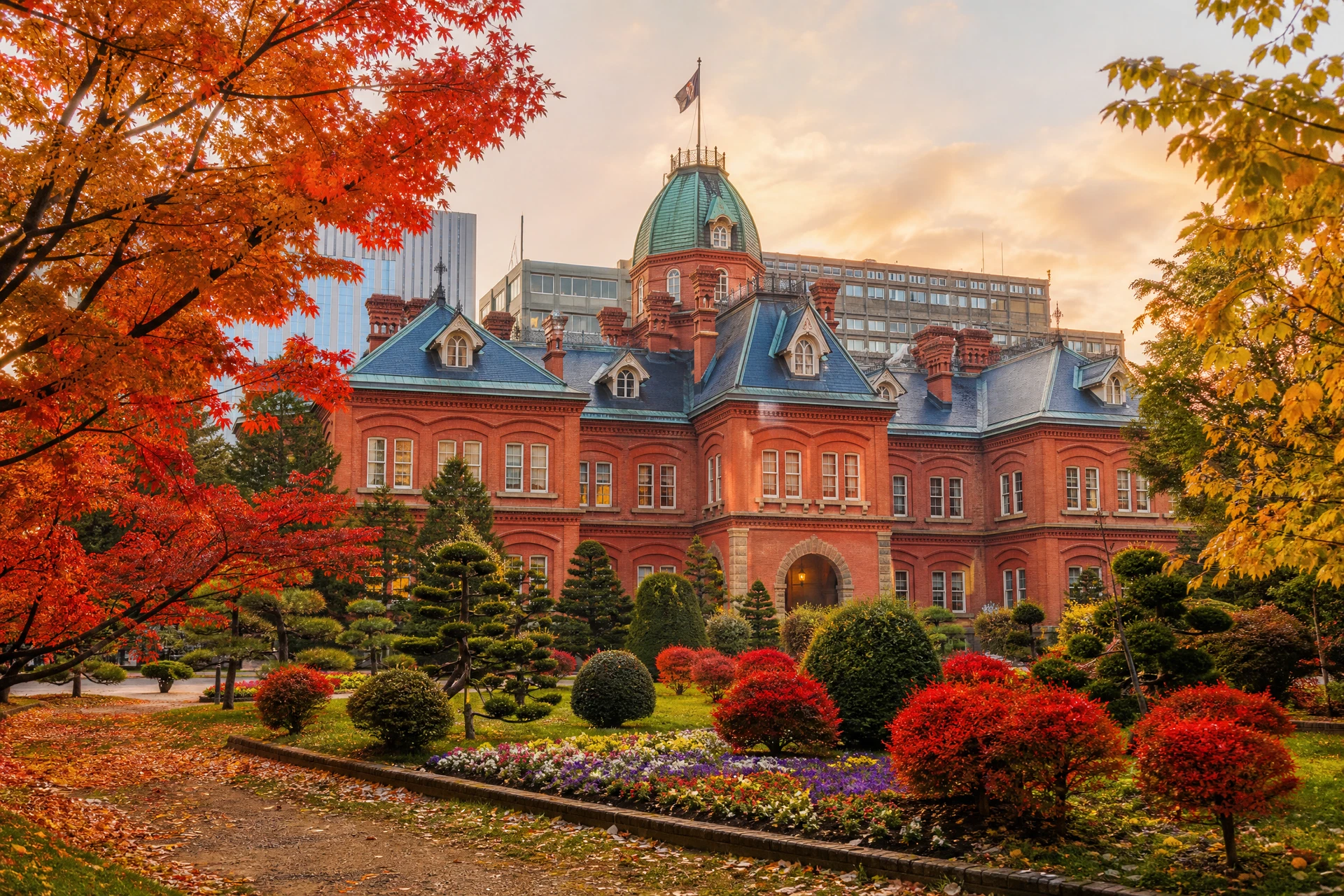
Step back from the façade to appreciate the building’s symmetry, warm colour, and confident contrast with the nearby city blocks.
Sapporo Heritage · Red Brick Office
The Red Brick Office brings a richly detailed piece of Hokkaido history into the heart of present-day Sapporo.
The Story
Completed in 1888, the Former Hokkaido Government Office is known locally as Akarenga—the Red Brick Office. Its American neo-baroque influence, red-star detail, and carefully composed brickwork make it one of the city’s most recognisable silhouettes.
The building served as a government office for around eight decades before the current administration complex was built. Today, it rewards a slower visit: notice the period glass, double doors, and gardens before continuing into the surrounding central city.
Its location just west of Sapporo Station makes it a natural part of a central itinerary. A private car can connect the Red Brick Office to the Clock Tower, Odori Park, and Hokkaido University area with a route adjusted for weather, museum access, and the pace of your group.
1888
Completed
Akarenga
Local nickname
Neo-baroque
Architectural influence
How to Experience It
01
Step back from the façade to appreciate the building’s symmetry, warm colour, and confident contrast with the nearby city blocks.
02
Old glass, doors, and small architectural traces give the building a tactile quality that photographs alone do not capture.
03
Continue into nearby parks, historic streets, or a central Sapporo lunch without the usual logistics of a self-guided day.
A Closer Look
01
The nickname is more than a visual shortcut. The warm brick façade has become one of Sapporo’s most recognisable symbols, offering a striking counterpoint to the city’s newer glass and steel skyline.
02
Constructed in 1888, the building draws on American neo-baroque ideas. Its balanced façade, tower, and robust brick construction reveal the outward-looking influences present in Hokkaido’s development era.
03
The office served as a seat of government for roughly eight decades. Look for the red star associated with the Hokkaido Development Commission, then explore the exhibitions and architectural details at an unhurried pace.
Seasonal Rhythm
Winter
The colour contrast is at its most dramatic in snow. This stop combines easily with a warm indoor museum visit, a central hotel pick-up, or an evening route through winter illuminations.
Spring
The surrounding grounds become a natural breathing space after the city’s long winter. Pair the building with a gentle central walk before continuing to Odori Park.
Summer
The gardens and interior exhibits provide a change of pace from busier outdoor sightseeing. A private vehicle keeps this stop easy to include between lunch, shopping, and city viewpoints.
Autumn
The building’s textured façade gains warmth in autumn light. It is an especially good season for travellers who enjoy architectural photography and slower heritage routes.
Suggested Private Route
Use this landmark as the beginning of a flexible central Sapporo route, then follow the story of the city through its historic buildings, park axis, food stops, and evening views.
Build It Into Your Day
Nearby on a private charter
Sapporo Clock Tower · Odori Park · Sapporo TV Tower · Hokkaido University area
Private Sapporo Charter
Pair this stop with the places, restaurants, and scenic pauses that matter most to your group.