
01
Listen for the hour
Pause in the surrounding streets as the clock marks the hour, a simple ritual that connects the building to daily city life.
Sapporo Heritage · Central Sapporo
A small wooden landmark with an outsized place in the story of Sapporo’s early modern identity.
The Story
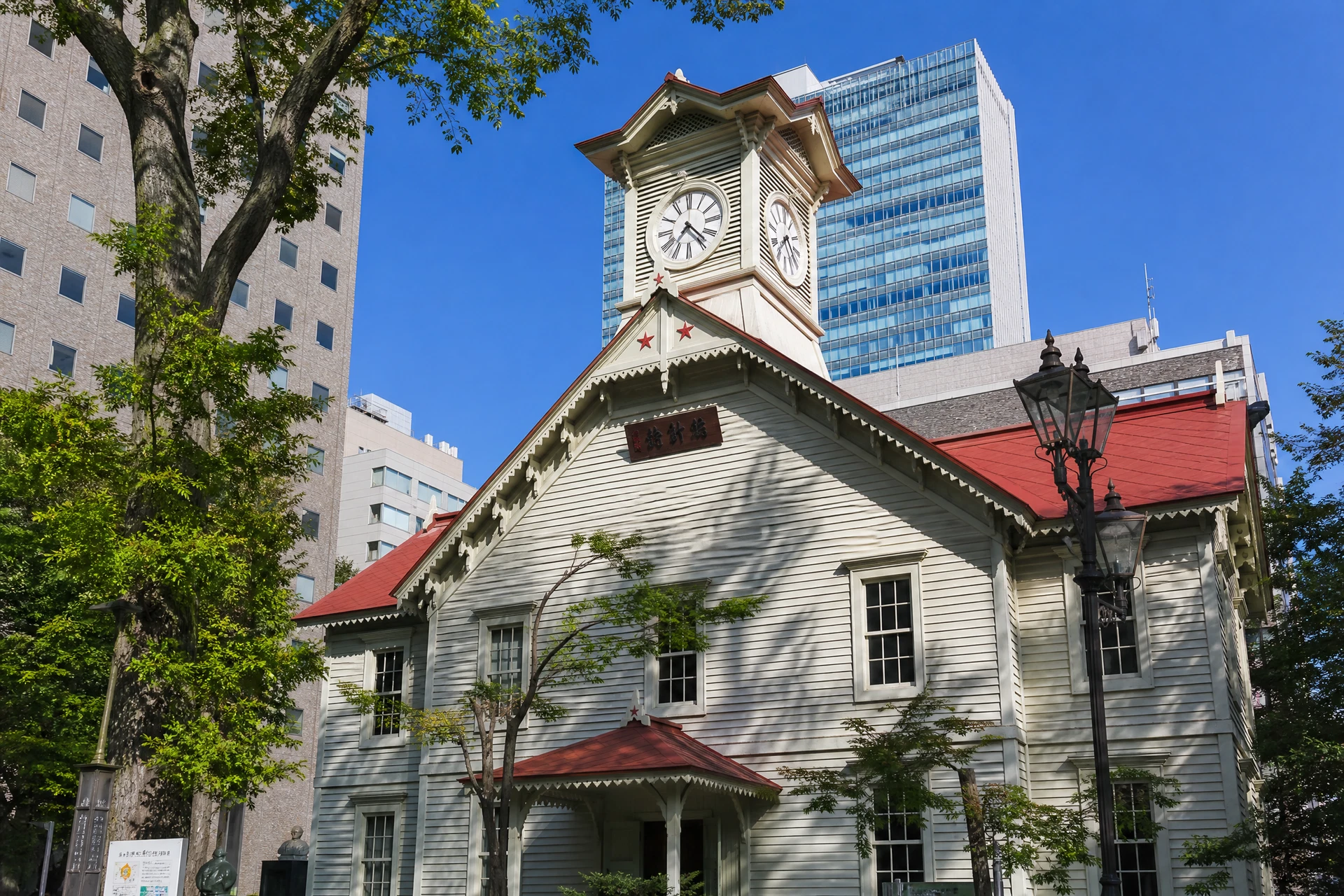
The Sapporo Clock Tower began as a drill hall for Sapporo Agricultural College in 1878. Its weatherboard façade and distinctive clock contrast sharply with the larger contemporary buildings around it, creating a vivid reminder of how quickly the city has changed.
The building is best experienced as part of a compact central-Sapporo walk rather than a single isolated stop. A private driver can place it between Odori Park, the former government office, and a lunch or coffee break in the nearby streets—without losing time to transfers or parking.
Inside, the building’s history reaches beyond the familiar façade. Early rooms served academic, exhibition, training, and ceremonial purposes, while the clock itself was added in 1881. Today the museum context turns a quick exterior stop into a clearer view of Sapporo’s formative years.
1878
Original construction
College
Historic purpose
Central
Sapporo location
How to Experience It
01
Pause in the surrounding streets as the clock marks the hour, a simple ritual that connects the building to daily city life.
02
The modest scale is part of the appeal: the structure reveals a rare early chapter of Sapporo among the high-rise city around it.
03
Combine the Clock Tower with the Red Brick Office for a concise, character-rich route through Hokkaido’s development-era architecture.
A Closer Look
01
The structure was created for Sapporo Agricultural College, now Hokkaido University. Its original role included physical training and major school ceremonies, reflecting the practical ambitions of a developing frontier city.
02
The large clock was installed in 1881 after being sourced from the E. Howard Watch & Clock Company in Boston. That detail gives the tower a direct connection to the international influences shaping early Sapporo.
03
Recognised as a National Important Cultural Property in 1970, the Clock Tower now works as a museum and cultural venue, allowing visitors to encounter the city’s past in the middle of today’s commercial centre.
Seasonal Rhythm
Winter
Snow accentuates the building’s red roof and pale wooden exterior. It makes a particularly photogenic first or final stop on a warm, short-distance central city route.
Spring
As Odori Park turns green, the Clock Tower becomes part of an easy walking link between the park, the Red Brick Office, and central cafés or galleries.
Summer
In the warmer months, use the museum visit as a calm interval between outdoor sights. A driver can keep the route fluid, with luggage and umbrellas safely managed in the vehicle.
Autumn
The lower sun adds texture to the woodwork and surrounding streets. Pair the stop with the nearby former government office for an architecture-focused afternoon.
Suggested Private Route
This compact route is designed for travellers who want context as well as photographs. It combines the two most recognisable historic buildings with a city view and flexible dining stop.
Build It Into Your Day
Nearby on a private charter
Odori Park · Sapporo TV Tower · Former Hokkaido Government Office · Nijo Market
Private Sapporo Charter
Pair this stop with the places, restaurants, and scenic pauses that matter most to your group.