
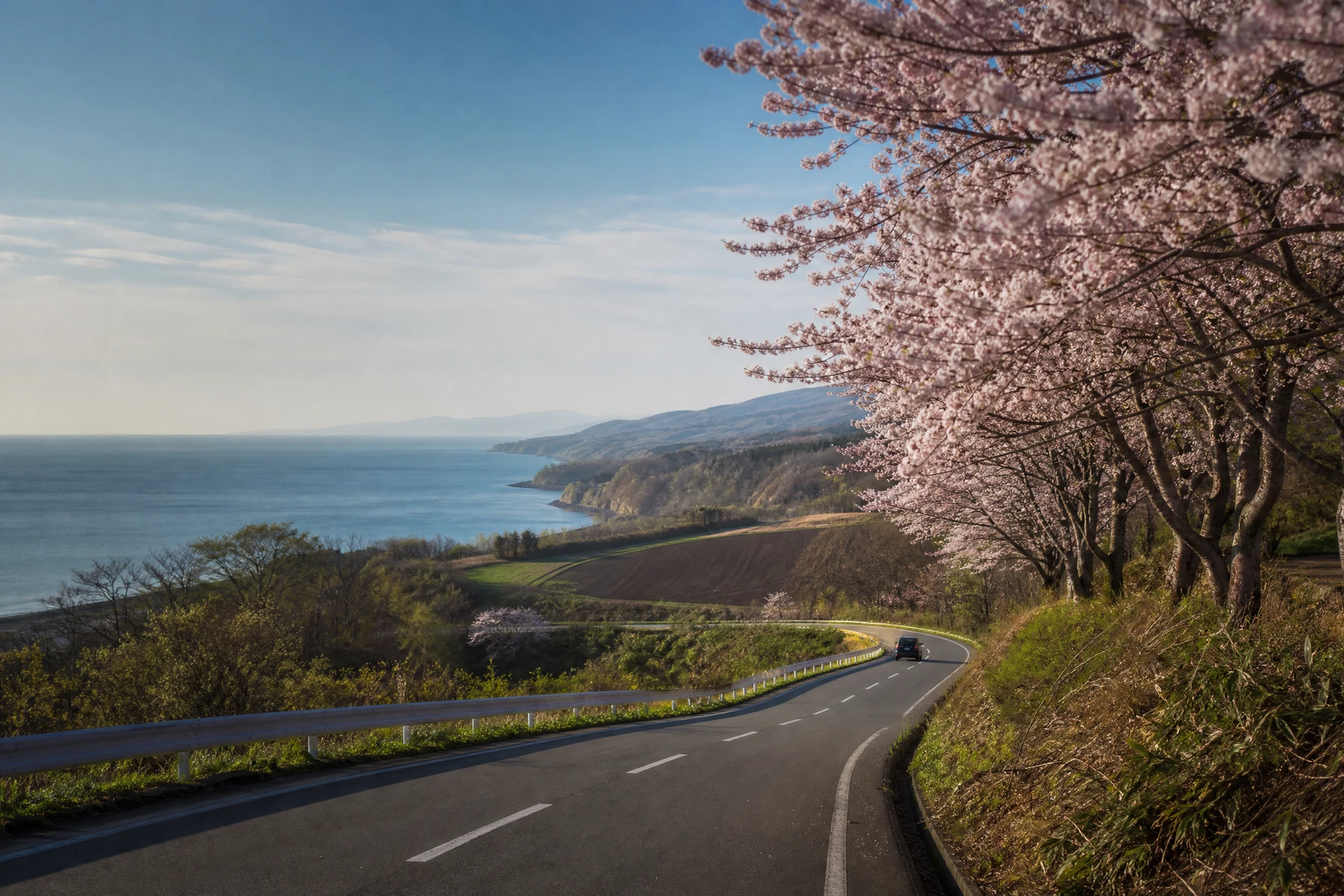
Spring in Hokkaido · late blossoms, open roads
Spring in Hokkaido: Cherry Blossoms, Coastal Roads, and a Quieter Pace
Spring arrives in Hokkaido with a little more patience—and rewards travellers who give the road a little more time.
A Hokkaido route feels better when its pace matches its purpose.
Spring in Hokkaido is not a smaller version of Tokyo’s blossom season. It is a later, slower opening of coastlines, parks, onsen towns, and countryside roads—often best experienced with fewer fixed appointments and more time to follow the day.
Hokkaido rewards clarity more than speed. Deciding what your day should feel like—rather than trying to see every pin on a map—creates room for weather, local food, and unexpected stops.
A private car is particularly useful when the road between experiences is part of the experience. It lets the route hold together without asking every member of the group to navigate luggage, timetables, or a rushed hotel change.
Hokkaido Tourism Organization describes April through June as a gradual arrival of spring. April can remain cold and sometimes snowy; May and June become warmer, although mornings, evenings, and higher elevations still call for a jacket.[1] This is a helpful reason to think of spring as a moving season rather than one exact weekend.
The blossom window also travels. Southern Hokkaido can be a natural opening chapter, while other regions follow later. Keep your hotel and route adaptable, check local forecasts closer to travel, and avoid building the entire trip around one afternoon at one park. The best spring itinerary lets flowers be a highlight—not a source of pressure.
Spring rewards a route with space: a park in the morning, a coast road in the afternoon, and no need to declare either the only point of the day.
Hakodate is a particularly strong spring base because it adds a historic port city, food, and evening atmosphere to a blossom-focused day. The official spring guide highlights Goryokaku’s roughly 1,600 Yoshino cherry trees along the fortification walls as one of Hakodate’s representative spring sights.[1] Pair the visit with Motomachi, the morning market, or a waterfront meal so the day has more than one note.
For a more open-road expression of spring, the Hidaka area offers a beautiful balance of Pacific coast and horse-country landscape. Hokkaido Tourism Organization describes Shinhidaka’s Nijukken Road as a seven-kilometre avenue where about 2,200 cherry trees bloom, and notes that Route 235 follows the Pacific through the area.[2]
Spring travel is ideal for a private driver when your day includes pieces that do not naturally align by public transport: a blossom park, a coastal viewpoint, a farm or local-food stop, and an onsen or dinner. It is not about filling every hour. It is about linking a few good places without having to watch the timetable between them.
A private car is also useful when the group has different energy levels. One person may want a long park walk, another may prefer a coffee with a view, and someone else may simply want to see the coast from the window. A flexible route can hold all of that together more naturally than a fixed sequence of transfers.

Blossom, coast, and one place to linger.
Spring does not need a dense attraction list. It needs a route that lets the landscape change gradually around you.
Choose a blossom region
Use Hakodate and southern Hokkaido for a city-and-sakura chapter, or follow a regional forecast that suits your dates.
Add the road that opens the day
Connect the park to a coastline, farm road, hot spring, or food stop so the travel between sights has its own value.
Leave room for spring conditions
Bring layers, watch the local forecast, and keep the plan light enough to choose the best bloom, light, or view on the day.

Questions to answer before the road begins.
When do cherry blossoms bloom in Hokkaido?
The timing is later than much of Japan and changes by location and year. Southern Hokkaido may see blossoms from late April, while early May is a useful broad planning window. Always check the current local forecast before finalising a day-by-day plan.
Is spring a good time for a Hokkaido road trip?
Yes, particularly for a slower route around southern coastlines, parks, food stops, and onsen. April can still feel wintry in some places, so build the route around current conditions rather than assuming every mountain or high-elevation activity is available.
Where should I stay for spring cherry blossoms in Hokkaido?
Hakodate is a compelling base for a spring city chapter, particularly if Goryokaku, port history, dining, and walkable neighbourhoods appeal. A private-driver day can then extend from the city into nearby countryside or coastal scenery.
What should I wear in Hokkaido in spring?
Layers are important. Hokkaido Tourism Organization recommends warm outerwear in April and notes that mornings, evenings, and high elevations can stay cool in May and June.[1] Comfortable shoes with good grip are also sensible where snow may linger.
Tell us where you would like the road to slow down.
Share your dates, blossom hopes, group, and preferred pace. We will help shape a private Hokkaido spring route around the coast, the flowers, and the moments between them.