

Tokachi · wide-sky Hokkaido
Tokachi and Obihiro by Private Car: Wide Skies, Farms, and Hot Springs
Tokachi is not a region to tick off quickly. It is a place to let the distance between a garden, a farm lunch, a riverbank onsen, and a horizon become part of the holiday.
A Hokkaido route feels better when its pace matches its purpose.
Obihiro and the broader Tokachi plain offer a different Hokkaido rhythm: long sightlines, farm country, gardens, local food, riverbank hot springs, and road days that feel expansive rather than rushed.
Hokkaido rewards clarity more than speed. Deciding what your day should feel like—rather than trying to see every pin on a map—creates room for weather, local food, and unexpected stops.
A private car is particularly useful when the road between experiences is part of the experience. It lets the route hold together without asking every member of the group to navigate luggage, timetables, or a rushed hotel change.
Obihiro works well as a base because the city gives the countryside a practical center: restaurants, hotels, a calm urban rhythm, and routes that radiate toward gardens, farms, mountains, and hot springs. JNTO describes the area as a base for southeastern Hokkaido, with gardens, outdoor experiences, and Tokachigawa Onsen close by.[1] That balance is what makes it good for travellers who want rural space without changing hotels every night.
Do not mistake a single hotel base for a limited itinerary. One night can hold a city dinner and a relaxed morning; the next day can become a farm-and-garden loop; another can head toward the hills, a lake, or an onsen. The value is in choosing a direction each day rather than repeatedly packing, checking out, and resetting the group.
If the trip begins at Tokachi-Obihiro Airport, keep the first day modest. JNTO notes that the city is roughly 30 minutes by car from the airport, but the first afternoon still has baggage, check-in, and weather to consider.[1] A good beginning is a simple local meal, a city walk, or a short onsen chapter—not a long cross-plain circuit.
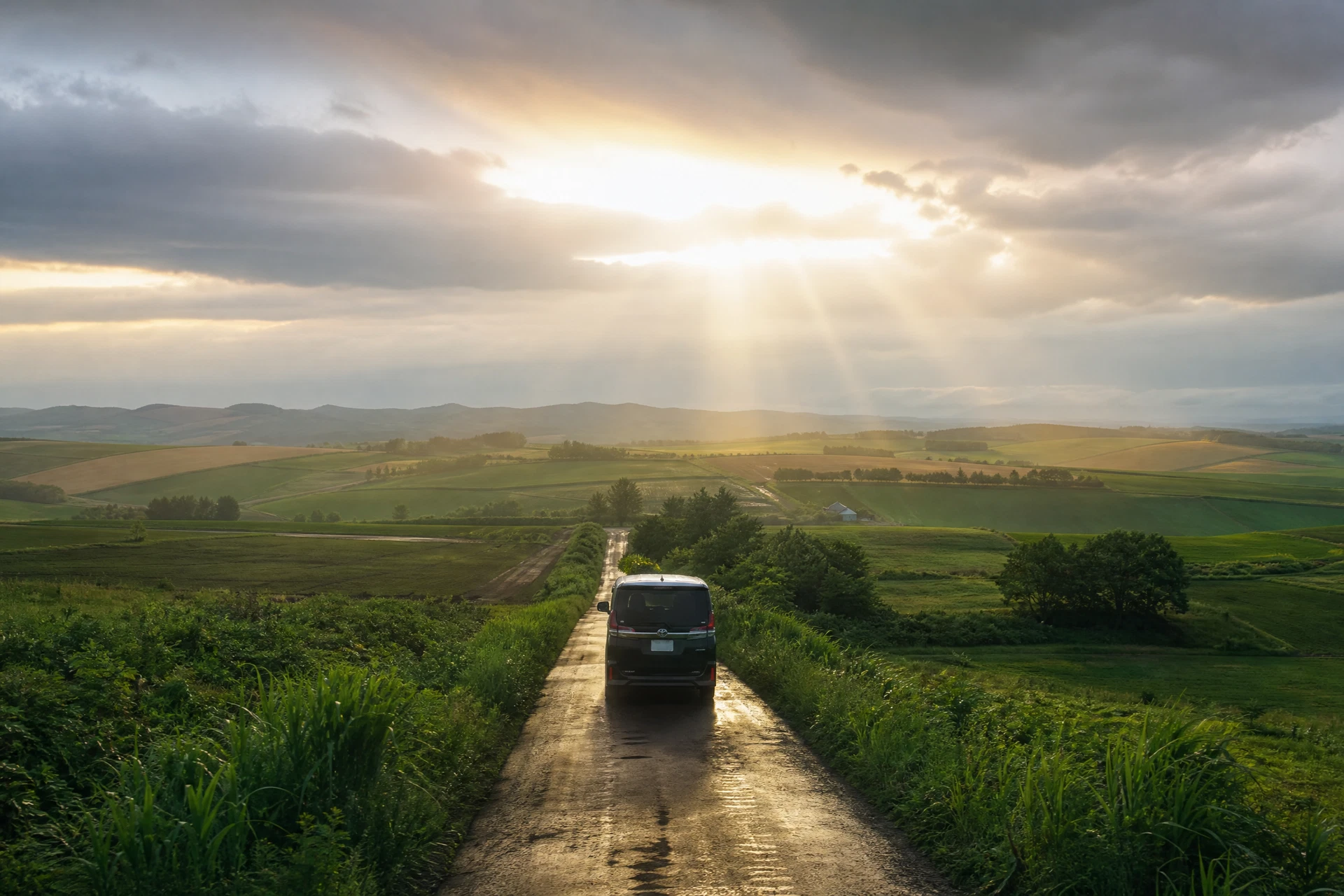
Tokachi’s agricultural landscape is powerful precisely because it is working land rather than a single attraction. Build one day around food and gardens, another around wider scenery and a hot spring, or a third around a particular seasonal interest. That approach gives you time for a slow café lunch, a farm shop, or an unplanned roadside view without treating every stop as a delay.
Gardens can work especially well when the group includes different energy levels: there is visual interest, an easy walking pace, and somewhere for a meal or break. Food-focused travellers might choose a route around local produce, sweets, or buta-don, allowing the driver to join the stops into a practical loop rather than a set of separate transfers.
A private car is most useful here not because public transport is impossible, but because the best day is often made of smaller places that do not line up on one timetable. You can decide to stay longer where the atmosphere is right, shorten a weather-exposed stop, or bring the onsen forward when the day has already delivered what you hoped for.
Tokachigawa Onsen is a natural counterpoint to the open plain. JNTO describes its riverbank spring water as infused with plant and botanical material accumulated in the groundwater, with a local history of being valued as “medicine water.”[1] Whether or not you choose a night there, the region is an argument for reserving at least one evening for warmth, quiet, and a meal that is not squeezed between drives.
The best final day is often the least crowded. Leave room for one garden, a favourite food stop, or a return to a viewpoint in clearer weather. If the route continues west toward Furano or north toward Daisetsuzan, make that transition its own day rather than assuming Tokachi is simply a gap between larger names on the map.
Tell your driver which quality matters most: food, wide views, seasonal gardens, a family-friendly pace, or a final onsen. In Tokachi, a clear priority creates a more memorable day than a long list of destinations.

One base, one daily direction, one evening that stays open.
Tokachi becomes more generous when your schedule has shape but not pressure.
Anchor in Obihiro or Tokachigawa
Choose the stay that gives your evenings the right balance of city food, rural quiet, or onsen time.
Give every day one theme
Farm food, gardens, mountain views, or hot springs—pick a primary rhythm before adding stops.
Keep the final stop flexible
Use light, weather, and the group’s energy to decide whether the day ends at a café, garden, or bath.
Questions to answer before the road begins.
How many nights should I stay in Tokachi or Obihiro?
Two nights is a strong minimum for one city-and-food evening plus one full countryside day. Add a third night if gardens, eastern Hokkaido, or a slower onsen pace are priorities.
Is Tokachi good for families?
Yes. The region can suit families when the daily route is kept simple: one outdoor focus, time for meals and breaks, and a hotel base that avoids repeated packing.
What is Tokachigawa Onsen known for?
The riverbank resort is known for moor-style hot spring water containing plant and botanical material from groundwater, as described by JNTO.[1] Check individual facilities for current bathing and stay information.
Why use a private car in Tokachi?
A private car makes it easier to join farm, garden, food, and onsen stops into one relaxed day, especially when weather or the group’s pace changes the best order.
Make space for Tokachi’s food, horizons, and hot springs.
Share your arrival point, interests, and preferred daily pace. We will shape a private Tokachi route around the places that make the plain feel personal.